Why High-Protein Oat Bread Belongs in Your Kitchen
Most people love bread, but not every loaf leaves you feeling satisfied for long. Many store-bought breads are light on protein and fiber, which means hunger often returns shortly after breakfast or lunch. This high-protein oat bread offers a better alternative. It is soft, hearty, and wholesome, made with oat flour, plain Greek yogurt, eggs, ground flaxseed, and a sprinkle of sunflower seeds on top.
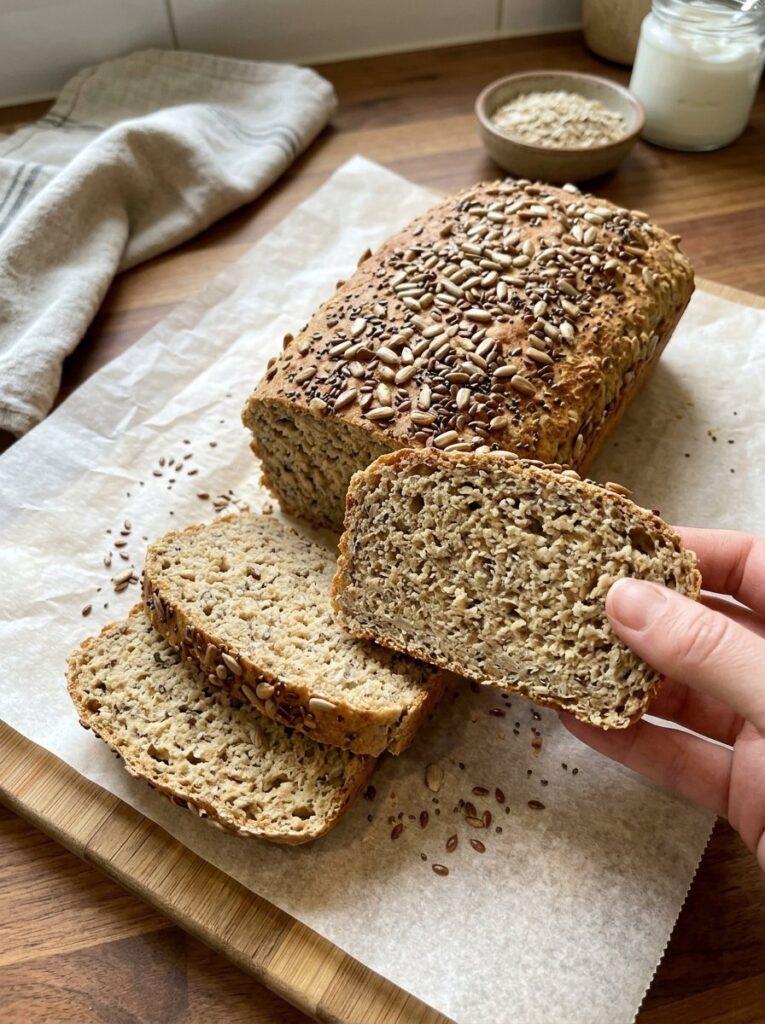
The loaf has a tender, moist crumb and a golden, lightly crisp crust. Greek yogurt adds creaminess and a gentle tang, eggs provide structure and protein, oat flour gives a mild, slightly sweet flavor, and the seeds add nutty crunch and extra nutrition. Best of all, it is a no-yeast quick bread, so there is no kneading, no proofing, and no waiting for dough to rise. You whisk, stir, pour, and bake.
This recipe is ideal for anyone looking to add more protein to their day, for people who want a simple homemade bread made with recognizable ingredients, and for busy cooks who need a reliable loaf that comes together in minutes. It is delicious toasted for breakfast, layered into sandwiches, or enjoyed as a satisfying snack.
In this guide you will find the complete recipe, an explanation of what each ingredient does, step-by-step directions, tips for the best texture, flavor variations, serving ideas, storage and freezing advice, and answers to frequently asked questions.
What Makes This Oat Bread Special?
Here is why this loaf is worth making:
- High in protein. Greek yogurt and eggs are both excellent protein sources, which makes each slice more filling than a typical bread.
- Rich in fiber and nutrients. Oats, flaxseed, chia seeds, and sunflower seeds all contribute fiber, healthy fats, and minerals.
- No yeast required. Baking powder does the lifting, so the bread is ready in about an hour from start to finish.
- Simple ingredients. Everything on the list is easy to find and easy to understand.
- Soft and moist. Greek yogurt and olive oil keep the crumb tender.
- Versatile. It works for sweet or savory toppings, sandwiches, and snacks.
- Easy cleanup. One bowl and one loaf pan are all you need.
Ingredients for High-Protein Oat Bread
- 2 cups (200 g) oat flour
- 1 cup (225 g) plain Greek yogurt
- 3 large eggs
- 1/4 cup (60 ml) milk
- 2 tablespoons olive oil
- 2 teaspoons baking powder
- 1/2 teaspoon salt
- 2 tablespoons ground flaxseed
- 2 tablespoons sunflower seeds
- 1 tablespoon chia seeds (optional)
A Closer Look at the Ingredients
Oat flour. Oat flour is the base of this bread. It has a mild, slightly sweet, wholesome flavor and gives the loaf a soft, tender texture. You can buy oat flour at most grocery stores, or make your own by blending old-fashioned rolled oats in a blender or food processor until they form a fine powder. If you make your own, measure the flour after blending, since the volume changes. Weighing is the most accurate method, which is why this recipe lists 200 grams for 2 cups. If you need the bread to be gluten-free, choose certified gluten-free oats or oat flour, because regular oats are often processed alongside wheat.
Plain Greek yogurt. Greek yogurt brings protein, moisture, and a subtle tang. Its thick texture helps create a tender, rich crumb. Plain, unsweetened yogurt is best so the bread stays savory and versatile. Full-fat or low-fat versions both work, though full-fat yogurt gives a slightly softer, richer loaf. Bring the yogurt close to room temperature before mixing for a smoother batter.
Eggs. Eggs bind the batter, add protein, and help the loaf set as it bakes. Since there is no gluten-rich wheat flour in this recipe, eggs are essential for structure. Use large eggs, and let them come to room temperature if possible so they blend easily with the yogurt.
Milk. A small amount of milk loosens the batter to the right consistency. Dairy milk or an unsweetened plant-based milk will work.
Olive oil. Two tablespoons of olive oil add richness, keep the crumb moist, and give the bread a subtle savory depth.
Baking powder. This is the leavening agent that lifts the loaf. Make sure your baking powder is fresh, since old baking powder loses its power and can leave you with a dense bread.
Salt. Salt is essential for flavor. It balances the mild taste of oats and yogurt and keeps the bread from tasting flat.
Ground flaxseed. Flaxseed adds fiber, healthy fats, and a nutty flavor. It also helps absorb moisture and contributes to the texture of the loaf. Use ground flaxseed rather than whole, since whole seeds pass through the body undigested and do not blend into the batter as well.
Sunflower seeds. Sprinkled on top, sunflower seeds toast as the bread bakes and add crunch and a rich, nutty flavor.
Chia seeds (optional). Chia seeds add extra fiber and omega-3 fats, and they absorb liquid, which helps the loaf hold together. They are optional but a nice nutritional boost.
Equipment You Will Need
- A standard loaf pan, about 9 by 5 inches, or a slightly smaller pan for a taller loaf
- Parchment paper
- A large mixing bowl
- A whisk and a spatula
- Measuring cups and spoons, or a kitchen scale
- A wire cooling rack
Parchment paper is strongly recommended. Oat-based quick breads can stick to the pan, and a parchment sling makes it easy to lift the finished loaf out without breaking it.
How to Make High-Protein Oat Bread
Step 1: Preheat the Oven and Prepare the Pan
Preheat your oven to 350 degrees Fahrenheit (175 degrees Celsius). Line a loaf pan with parchment paper, leaving a little overhang on the long sides to use as handles later.
Step 2: Whisk the Wet Ingredients
In a large mixing bowl, whisk together the eggs, Greek yogurt, milk, and olive oil until smooth. Take a minute to break up any lumps of yogurt so the mixture is creamy and uniform. A smooth base helps the batter mix evenly and keeps the finished loaf from having pockets of unmixed yogurt.
Step 3: Add the Dry Ingredients
Add the oat flour, baking powder, and salt to the wet mixture. Stir until everything is well combined and no dry streaks of flour remain. The batter will be thick, similar to a dense muffin batter. This is normal for oat flour bread.
Step 4: Fold in the Flax and Chia
Fold in the ground flaxseed and chia seeds, if using. Mix gently until they are evenly distributed. Do not overmix, since working the batter too much can make the loaf tough.
Step 5: Fill the Pan
Pour the batter into the prepared loaf pan and smooth the top with a spatula. Tap the pan gently on the counter to release any large air bubbles and help the batter settle into the corners.
Step 6: Add the Topping
Sprinkle the sunflower seeds evenly over the top of the batter. Press them in lightly so they stay in place during baking.
Step 7: Bake
Bake for 40 to 50 minutes, until the loaf is golden brown and a toothpick inserted into the center comes out clean. Start checking around 40 minutes, since ovens vary. If the top browns too quickly before the center is set, tent the loaf loosely with foil for the remaining baking time.
Step 8: Cool Completely
Allow the bread to cool completely before slicing so it holds together beautifully. This step is important. The crumb continues to set as the bread cools, and cutting into it while warm can lead to a gummy texture and crumbly slices. Lift the loaf out of the pan using the parchment, place it on a wire rack, and let it reach room temperature.
Tips for the Best High-Protein Oat Bread
- Measure the flour carefully. Too much oat flour can make the loaf dry and dense. Weigh it if you can.
- Use room temperature ingredients. Eggs and yogurt that are not ice-cold blend more smoothly and bake more evenly.
- Check your baking powder. Fresh baking powder is crucial for lift.
- Do not overmix. Stir just until combined for a tender crumb.
- Let the batter rest briefly if it seems very thick. A few minutes allows the oat flour to absorb moisture. If it still seems too stiff, add a splash more milk.
- Cool completely before slicing. Patience gives you clean slices and the best texture.
- Use a serrated knife. A gentle sawing motion preserves the crumb.
- Toast the slices. Toasting adds crispness and brings out a nutty, more bread-like flavor.
- Check doneness in the center. The top may look done before the middle is set, so test with a toothpick.
Flavor Variations and Add-Ins
The base recipe is mild and versatile, which makes it easy to customize.
Savory herb loaf. Add a tablespoon of chopped fresh herbs such as chives, rosemary, or thyme, along with a little garlic powder.
Cheesy oat bread. Fold in a quarter cup of shredded cheddar or parmesan for extra savory richness.
Seeded loaf. Add pumpkin seeds, sesame seeds, or poppy seeds to the batter and top with extra seeds.
Lightly sweet breakfast bread. Add a teaspoon of cinnamon and a tablespoon of honey or maple syrup. Serve with fruit and nut butter.
Fruit and nut version. Fold in a handful of chopped walnuts, pecans, or dried cranberries for added texture and flavor.
Everything seasoning. Replace the sunflower seeds on top with everything bagel seasoning for a savory, crunchy finish.
Pumpkin spice. Add a teaspoon of pumpkin pie spice for a cozy, fall-inspired loaf.
Extra protein boost. Stir in a scoop of unflavored protein powder, adding a little more milk if the batter becomes too thick. This is an optional adjustment, and results may vary by product.
How to Serve High-Protein Oat Bread
This loaf is flexible enough for any meal of the day.
Avocado toast. Toast a slice and top it with mashed avocado and a sprinkle of sea salt. Add a soft-boiled egg or red pepper flakes for extra flavor.
Peanut butter and banana. Spread a slice with peanut butter and top with sliced banana for a filling breakfast or snack.
Turkey and cheese sandwiches. The sturdy, hearty crumb holds up well to sandwich fillings. Layer turkey, cheese, lettuce, and tomato for a high-protein lunch.
Cream cheese and fresh tomatoes. Spread with cream cheese, top with sliced tomatoes, and finish with salt, pepper, and fresh herbs.
With eggs. Serve toasted slices alongside scrambled or fried eggs for a protein-packed breakfast.
With soup or salad. Serve warm slices alongside a bowl of soup or a big salad for a satisfying meal.
Sweet toast. Top with ricotta, honey, and berries, or with Greek yogurt and sliced fruit.
As a snack. Cut into thin slices, toast until crisp, and enjoy plain or with a spread.
Storage and Freezing
Because this bread is moist and made with eggs and yogurt, it should be stored carefully.
- Cool completely first. Storing warm bread causes condensation and makes the loaf soggy.
- Refrigerate. Wrap the cooled loaf tightly or place the slices in an airtight container and keep them in the refrigerator. For best quality, plan to eat the bread within about four to five days.
- Freeze for longer storage. Slice the cooled loaf, separate the slices with parchment paper, and freeze them in a freezer-safe bag or container. Frozen slices keep well for a couple of months.
- Reheat. Toast slices straight from the refrigerator or freezer for the best texture. You can also warm them briefly in a 350 degrees Fahrenheit oven or in a skillet.
- Discard if spoiled. If you notice mold, an off smell, or a slimy texture, throw the bread away.
These times are general guidelines for homemade bread made with eggs and dairy. When in doubt, follow safe food handling practices.
Frequently Asked Questions
Does this bread contain yeast?
No. This is a quick bread that uses baking powder for lift. There is no kneading, proofing, or rising time.
How much protein does this bread have?
The exact amount depends on the brands of Greek yogurt and oat flour you use and how thickly you slice the loaf. Greek yogurt and eggs are the main protein sources, so the loaf is more protein-rich than most standard breads. For precise nutrition values, enter your specific ingredients into a nutrition calculator.
Is this bread gluten-free?
The ingredients are naturally gluten-free, but oats are often processed alongside wheat. If you need a strictly gluten-free loaf, use certified gluten-free oat flour and check the labels on your baking powder and any add-ins.
Can I make my own oat flour?
Yes. Blend old-fashioned rolled oats or quick oats in a blender or food processor until they become a fine powder. Measure or weigh the flour after blending for accuracy.
Can I use regular yogurt instead of Greek yogurt?
Regular yogurt is thinner and has less protein, so the batter will be wetter and the loaf less protein-rich. If you use it, you may need to add a little more oat flour or strain the yogurt first to thicken it.
Can I use flavored yogurt?
Plain yogurt is recommended so the bread stays versatile. Flavored yogurt adds sugar and can change the taste and texture.
Can I make this bread dairy-free?
You can try replacing the Greek yogurt with a thick, unsweetened dairy-free yogurt and the milk with a plant-based milk. The texture and flavor may differ slightly from the original.
Can I make this bread without eggs?
Eggs are essential for structure in this recipe, so omitting them will change the texture significantly. Egg replacements may work, but the loaf may be denser or more fragile.
Why is the center of my bread gummy?
Gumminess usually means the loaf was underbaked or sliced before it cooled. Make sure a toothpick comes out clean from the center, and let the bread cool completely before cutting.
Why is my bread dry?
Too much flour, overbaking, or overmixing can contribute to dryness. Weigh the flour, check for doneness at 40 minutes, and mix only until combined.
Why did my bread not rise much?
This is a dense, hearty quick bread, so it will not rise as dramatically as a yeast loaf. If it seems especially flat, check that your baking powder is fresh and that you did not overmix.
Can I make muffins instead of a loaf?
Yes. Spoon the batter into a lined muffin tin and bake for about 20 to 25 minutes, checking for doneness with a toothpick. Muffins are great for grab-and-go breakfasts and snacks.
Can I double the recipe?
Yes. Double all the ingredients and use two loaf pans, or a larger pan, and check for doneness with a toothpick. Baking times may vary.
Can I leave out the seeds?
Yes. The seeds add nutrition and texture, but the bread will still bake properly without them. If you omit the flaxseed, the batter may be slightly thinner, so add a spoonful more oat flour if needed.
Why Choose Homemade High-Protein Bread?
Store-bought bread is convenient, but homemade has real advantages.
- More protein. Greek yogurt and eggs make this bread more filling than most standard sandwich loaves.
- Simple ingredients. You know exactly what is in your bread, with no unfamiliar additives.
- Easy and fast. There is no yeast, no kneading, and no rising time.
- Customizable. You can change the seeds, spices, and add-ins to suit your taste.
- Budget friendly. The ingredients are affordable and easy to find.
- Great for meal prep. Slice and freeze the loaf, and you have ready-to-toast bread for the entire week.
Nutrition Notes
Oats provide whole-grain fiber, Greek yogurt and eggs add protein and calcium, flaxseed and chia seeds contribute omega-3 fats and fiber, and olive oil adds healthy fats. Exact nutrition varies with the brands and versions of the ingredients you choose. If you have allergies, dietary restrictions, or health conditions, check ingredient labels and consult a qualified professional as needed.
Final Thoughts: A Hearty Loaf That Keeps You Full
High-protein oat bread proves that wholesome, satisfying bread does not have to be complicated. With oat flour, Greek yogurt, eggs, olive oil, and a handful of seeds, you can bake a soft, golden loaf that is perfect for breakfast, lunch, and snacks.
Make it for avocado toast, pack it into sandwiches, or slice and freeze it for busy mornings. Measure the flour carefully, bake until a toothpick comes out clean, and let the loaf cool completely before slicing for the best texture.
Whether you are looking for a no-yeast bread, a high-protein breakfast, or a simple homemade staple, this oat bread is a great place to start. Give it a try, make it your own, and share it with someone who loves wholesome, homemade food.
Print
High-Protein Oat Bread: A Soft, Hearty Greek Yogurt Loaf for Toast and Sandwiches
Description
Soft, hearty, and wonderfully satisfying! This homemade oat bread combines protein-rich Greek yogurt and eggs with wholesome oats to create a delicious loaf. Perfect for breakfast, healthy sandwiches, or crispy morning toast!
Ingredients
- 2 cups (200g) oat flour
- 1 cup (225g) plain Greek yogurt
- 3 large eggs
- ¼ cup (60ml) milk
- 2 tbsp olive oil
- 2 tsp baking powder
- ½ tsp salt
- 2 tbsp ground flaxseed
- 2 tbsp sunflower seeds
- 1 tbsp chia seeds (optional)
Instructions
- Preheat your oven to 350°F (175°C). Line a loaf pan with parchment paper.
- In a large mixing bowl, whisk together the eggs, Greek yogurt, milk, and olive oil until smooth.
- Add the oat flour, baking powder, and salt.
- Mix until everything is well combined.
- Fold in the ground flaxseed and chia seeds.
- Pour the batter into the prepared loaf pan and smooth the top.
- Sprinkle sunflower seeds over the surface.
- Bake for 40–50 minutes, until golden and a toothpick inserted into the center comes out clean.
- Allow the bread to cool completely before slicing so it holds together beautifully.