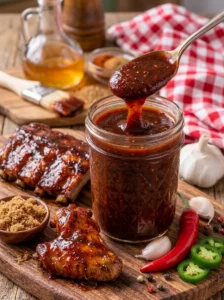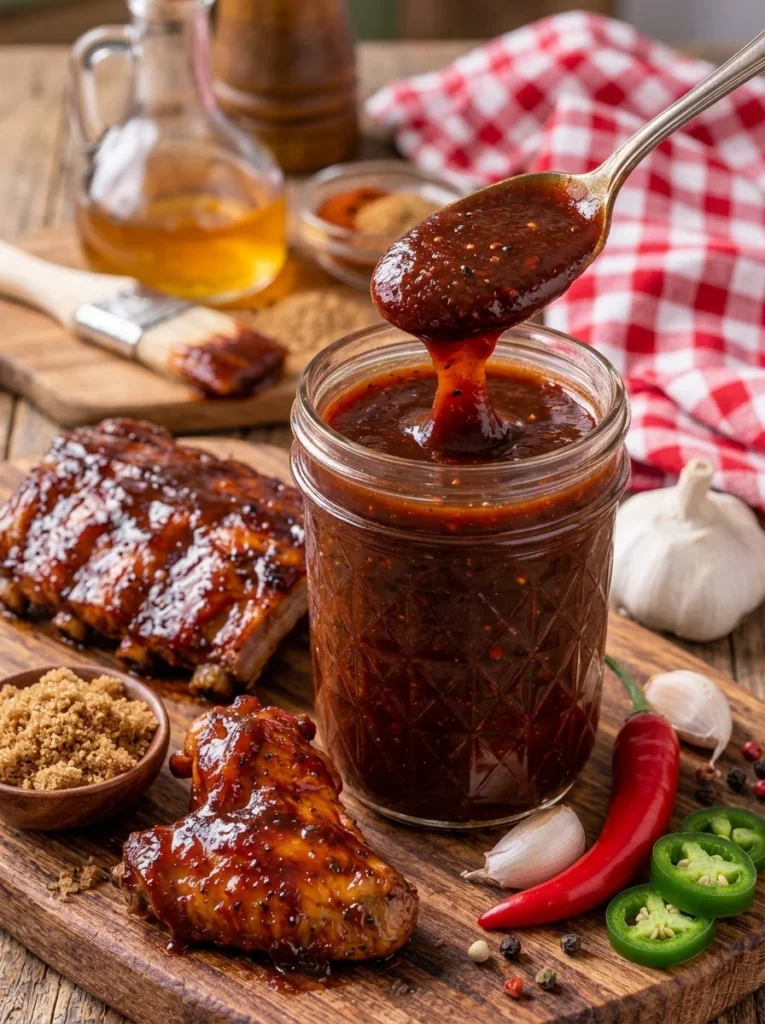
Shut the Front Door BBQ Sauce is a sweet, tangy, smoky sauce made with ketchup, apple cider vinegar, molasses, mustard, and Worcestershire sauce. Brown sugar and honey round out the sharpness, while hot sauce and cayenne give it a peppery finish.
Everything goes into one saucepan. A gentle simmer dissolves the sugar, blends the seasonings, and thickens the mixture into a glossy sauce for ribs, chicken, burgers, pulled pork, or dipping.
This is a rich, assertive sauce rather than a thin vinegar mop. Start with a moderate coating on meat and offer more at the table. Because it contains several sugars, brush it onto grilled food near the end of cooking to reduce scorching.
Recipe at a glance: 5 minutes prep · approximately 25–30 minutes heating and simmering · about 30–35 minutes total, plus optional cooling · approximately 2½–3 cups, depending on reduction.
Why You’ll Love This Sauce
- One saucepan: No chopping or skillet preparation is required.
- Layered flavor: Vinegar, mustard, molasses, and smoke provide more than sweetness alone.
- Adjustable heat: Hot sauce and cayenne can be tuned to your preference.
- Useful for glazing and dipping: Adjust consistency with a little water as needed.
- Easy freezing: Divide extra sauce into portions for later meals.
What Kind of BBQ Sauce Is It?
This is a ketchup-based barbecue sauce with molasses sweetness, vinegar tang, mustard, and smoky spices. The name is playful; it is not a standardized regional formula or an exact copy of a bottled product.
The sauce should be thick enough to coat a spoon but still pour. Cooling makes it thicker, so avoid reducing it until it resembles a paste while hot.
Ingredients
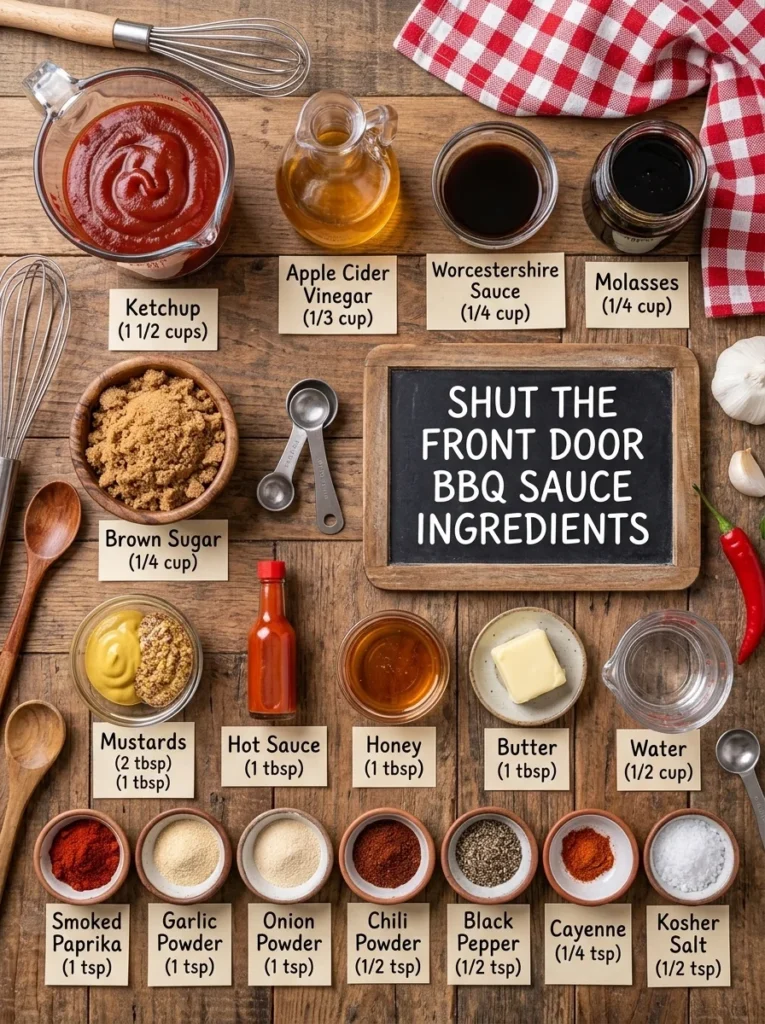
- 1½ cups ketchup
- ⅓ cup apple cider vinegar
- ¼ cup Worcestershire sauce
- ¼ cup molasses
- ¼ cup packed brown sugar
- 2 tablespoons yellow mustard
- 1 tablespoon Dijon mustard
- 1 tablespoon hot sauce
- 1 tablespoon honey
- 1 tablespoon butter
- 1 teaspoon smoked paprika
- 1 teaspoon garlic powder
- 1 teaspoon onion powder
- ½ teaspoon chili powder
- ½ teaspoon black pepper
- ¼ teaspoon cayenne, or less to taste
- Up to ½ teaspoon kosher salt, to taste
- ½ cup water
Ingredient Notes
Ketchup: Provides the tomato base and already contains sugar, acidity, and salt. Brands differ, so the finished balance will vary. Sugar-free ketchup makes a different version; it does not eliminate the sugar from molasses, honey, and brown sugar.
Apple cider vinegar: Gives a rounded tang. Start with the listed amount and adjust after simmering. Its presence does not make the finished sauce a validated shelf-stable preserve.
Worcestershire sauce: Adds savory depth and salt. The ¼ cup quantity is substantial, so taste before adding the full optional salt amount. Many brands contain anchovies; check labels for allergens and dietary needs.
Molasses: Use regular unsulphured molasses for a rounded flavor. Blackstrap molasses is more bitter and is not an identical substitute.
Brown sugar and honey: Both contribute sweetness, and brown sugar should be measured packed as written. This is intentionally a sweet barbecue sauce.
Two mustards: Yellow mustard adds familiar tang, while Dijon gives another savory note. Use smooth Dijon if you want a smooth sauce.
Hot sauce and cayenne: Their heat varies considerably. Start with less cayenne if your hot sauce is strong. Increasing both at once makes it harder to control the result.
Butter: Adds richness. Unsalted butter gives more control over the already salty base. If using salted butter, reduce added salt further.
Chili powder: Here this refers to a seasoning blend, not necessarily pure ground chile. Check the product if unsure. Smoked paprika provides the main smoky note.
Water: Helps dissolve and combine the ingredients before reduction. Add small extra amounts only if the simmered sauce is too thick.
How to Make It
1. Combine the ingredients
Put all ingredients except most of the added salt into a medium heavy-bottomed saucepan. Begin with little or no extra salt; ketchup, mustard, Worcestershire, and hot sauce already contribute it.
Choose a pan with room above the mixture so bubbling sauce does not spill.
2. Warm and whisk
Heat over medium heat, whisking until the butter melts and the sugar dissolves. Scrape the bottom and corners so concentrated syrup does not sit against the hot pan.
3. Simmer gently
Once the sauce begins simmering, reduce heat to low. Cook uncovered for 20–25 minutes, stirring regularly, until glossy and slightly thickened.
Avoid a rolling boil. Thick tomato sauce splatters, and sugar can scorch at the bottom. Use a splatter screen if needed rather than covering tightly and trapping all the moisture.
4. Taste and adjust
Cool a small spoonful before tasting. Adjust one flavor at a time, using the guidance below. After adding brown sugar or dry spice, simmer briefly to dissolve or incorporate it before tasting again.
5. Cool briefly or serve warm
The sauce can be used warm once cooked. If you want to assess its cooled thickness, rest for about 10–15 minutes. Transfer storage portions into clean heat-safe containers and refrigerate promptly rather than waiting for a full saucepan to become completely cold.
Blending is normally unnecessary because there are no chopped ingredients. If you choose to blend, cool sufficiently and follow your blender’s hot-liquid instructions. Never seal steaming sauce in a personal blender cup.
How to Adjust the Flavor
| Goal | Adjustment |
|---|---|
| More tang | Add vinegar one teaspoon at a time. |
| More sweetness | Add honey or brown sugar one teaspoon at a time, dissolving sugar before retasting. |
| More heat | Add a small amount of hot sauce or a pinch of cayenne, then simmer briefly. |
| Thinner sauce | Stir in water one tablespoon at a time. |
| Thicker sauce | Simmer uncovered a little longer, stirring; check a cooled sample before reducing much further. |
| Less saltiness | Dilution with unsalted tomato ingredients or water changes yield and balance. Avoid reducing salty sauce further. |
Do not attempt to hide a burned flavor with more sugar. Severely scorched sauce is difficult to rescue; gentle heat and frequent stirring are the better solution.
Tips for Using BBQ Sauce on Meat
Glaze late. Ketchup, molasses, sugar, and honey can burn over direct high heat. Add thin layers during the final cooking stage, turning as needed.
Use moderate heat for the finish. Move food away from the hottest part of the grill if the glaze darkens too quickly.
Keep serving sauce separate. Pour out the portion for brushing before working with raw or undercooked meat. Do not return a used brush or contaminated portion to the clean storage jar.
Cook meat independently of sauce appearance. A dark glaze is not a doneness test. Use the appropriate internal temperature for the meat you are preparing.
Offer extra at the table. Several thin coats give more control than one heavy coating.
Variations
Milder: Reduce cayenne and use a mild hot sauce.
Less smoky: Reduce smoked paprika to ½ teaspoon.
Mustard-forward: Add another teaspoon or two of yellow mustard after tasting.
Dairy-free: Omit the butter or use a suitable plant-based replacement, checking the full ingredient labels.
Vegetarian adaptation: Use a Worcestershire sauce without anchovies. A vegan adaptation also requires replacing honey and butter with suitable alternatives.
These changes affect flavor and nutrition. They do not turn the recipe into a tested canning formula.
Serving Suggestions
Brush over cooked or nearly finished ribs, chicken, burgers, or meatloaf. Stir a modest amount into pulled pork, adding more according to taste instead of saturating the meat immediately.
Serve alongside crispy chicken, fries, roasted potatoes, or grilled vegetables as a dipping sauce. A small portion is enough to start because the flavor is rich and concentrated.
For steak, serve it on the side if you want the beef’s own flavor to remain prominent. Avoid relying on this sugary sauce as a long high-heat searing coating.
Troubleshooting
| Problem | What to check |
|---|---|
| Sauce catches on the bottom | Lower heat and stir more frequently with a utensil that reaches the corners. |
| Sauce thickens too much after cooling | Add water gradually and stir or warm gently. |
| Sauce is too sweet | Add vinegar in small increments rather than a large pour. |
| Heat is overwhelming | Use smaller portions or make a milder additional batch to combine; extra honey alone does not remove heat. |
| Flavor is bitter | Check for blackstrap molasses, excessive spices, or scorching. |
| Sauce is salty | Reduce added salt and check condiment brands next time. |
Storage and Freezing
Keep covered at 40°F or below and refrigerate within 2 hours of preparation, or within 1 hour above 90°F. Use clean utensils and keep sauce used with raw meat separate.
The supplied two-week shelf life has not been validated for this exact mixture. For a conservative home-use approach, treat it as a cooked sauce and use within 3–4 days of preparation. This is a general handling recommendation, not a measured shelf-life study of the recipe.
Freeze extra portions promptly in freezer-safe containers for up to 3 months for best quality. Leave room for expansion and thaw overnight in the refrigerator. Stir before using; separation or a change in thickness can occur.
Warm gently in a saucepan with a little water if necessary. When reheating as a hot leftover, heat thoroughly to 165°F while stirring.
Do not store this recipe at room temperature or water-bath can it. Vinegar, sugar, a clean jar, and hot filling do not establish shelf stability. Use a research-tested formula and processing method if pantry storage is your goal.
Nutrition and Yield
Approximately 2½ cups may be achievable with reduction, but the starting ingredients contain more volume. The finished batch may be closer to 2½–3 cups depending on simmer intensity and time. Measure after cooking rather than forcing reduction to match a number.
At 2½ cups, the yield is twenty two-tablespoon portions; at 3 cups, it is twenty-four. The supplied calorie estimate is not retained because ingredient brands and actual yield have not been calculated. Count the whole batch from labels and divide by the number of measured portions if nutrition tracking matters.
Frequently Asked Questions
Do I need to blend it?
Usually not. Whisking and simmering should produce a smooth sauce because the ingredients are already finely textured.
Can I use blackstrap molasses?
It gives a stronger, more bitter flavor. Regular unsulphured molasses is recommended for the intended balance.
Can I make it sugar-free by using sugar-free ketchup?
No. Honey, brown sugar, and molasses still contribute sugar. A fully sugar-free sauce requires a different formula.
Can I double the batch?
Yes. Use a larger saucepan and allow extra time to heat and reduce. Freeze what you will not use promptly.
Why does it thicken when cold?
The concentrated tomato-and-sugar mixture thickens as it cools. Judge a cooled sample before reducing it excessively.
Is it a marinade?
It can flavor food, but its sugars make it particularly useful as a late glaze or serving sauce. Keep any portion that contacts raw meat separate from the clean batch.
Recipe Card
Shut the Front Door BBQ Sauce
A sweet, tangy ketchup-based barbecue sauce with molasses, mustard, smoky spices, and pepper heat.
Prep: 5 minutes
Heat and simmer: Approximately 25–30 minutes
Total: Approximately 30–35 minutes, plus optional cooling
Yield: Approximately 2½–3 cups; measure after cooking
Ingredients
- 1½ cups ketchup
- ⅓ cup apple cider vinegar
- ¼ cup Worcestershire sauce
- ¼ cup regular unsulphured molasses
- ¼ cup packed brown sugar
- 2 tablespoons yellow mustard
- 1 tablespoon Dijon mustard
- 1 tablespoon hot sauce
- 1 tablespoon honey
- 1 tablespoon butter, preferably unsalted
- 1 teaspoon each smoked paprika, garlic powder, and onion powder
- ½ teaspoon chili powder
- ½ teaspoon black pepper
- ¼ teaspoon cayenne, or less to taste
- Up to ½ teaspoon kosher salt, to taste
- ½ cup water
Instructions
- Combine ingredients in a medium saucepan, holding back most added salt until tasting.
- Warm over medium heat, whisking until butter melts and sugar dissolves.
- Bring to a gentle simmer, reduce heat to low, and cook uncovered 20–25 minutes, stirring regularly, until glossy and slightly thickened.
- Taste a cooled sample and adjust vinegar, sweetness, heat, or water gradually. Add salt only if needed.
- Use warm or cool briefly to assess final thickness. Refrigerate storage portions promptly, or freeze extra sauce.
Notes
- Brush onto grilled meat near the end to limit burning.
- Keep sauce and utensils that contact raw meat separate from the serving batch.
- Exact yield and nutrition depend on reduction and ingredient labels.
- No verified two-week shelf life or canning method is claimed for this recipe.
Final Thoughts
Simmer gently, taste a cooled spoonful, and adjust one element at a time. Thin glazing layers and late application let the sweet, smoky sauce complement the food without burning before dinner is ready.
Print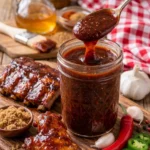
Shut the Front Door BBQ Sauce
- Total Time: Approximately 30–35 minutes, plus optional cooling
- Yield: Approximately 2½–3 cups; measure after cooking 1x
Ingredients
- 1½ cups ketchup
- ⅓ cup apple cider vinegar
- ¼ cup Worcestershire sauce
- ¼ cup regular unsulphured molasses
- ¼ cup packed brown sugar
- 2 tablespoons yellow mustard
- 1 tablespoon Dijon mustard
- 1 tablespoon hot sauce
- 1 tablespoon honey
- 1 tablespoon butter, preferably unsalted
- 1 teaspoon each smoked paprika, garlic powder, and onion powder
- ½ teaspoon chili powder
- ½ teaspoon black pepper
- ¼ teaspoon cayenne, or less to taste
- Up to ½ teaspoon kosher salt, to taste
- ½ cup water
Instructions
- Combine ingredients in a medium saucepan, holding back most added salt until tasting.
- Warm over medium heat, whisking until butter melts and sugar dissolves.
- Bring to a gentle simmer, reduce heat to low, and cook uncovered 20–25 minutes, stirring regularly, until glossy and slightly thickened.
- Taste a cooled sample and adjust vinegar, sweetness, heat, or water gradually. Add salt only if needed.
- Use warm or cool briefly to assess final thickness. Refrigerate storage portions promptly, or freeze extra sauce.
- Prep Time: 5 minutes
- Cook Time: Approximately 25–30 minutes