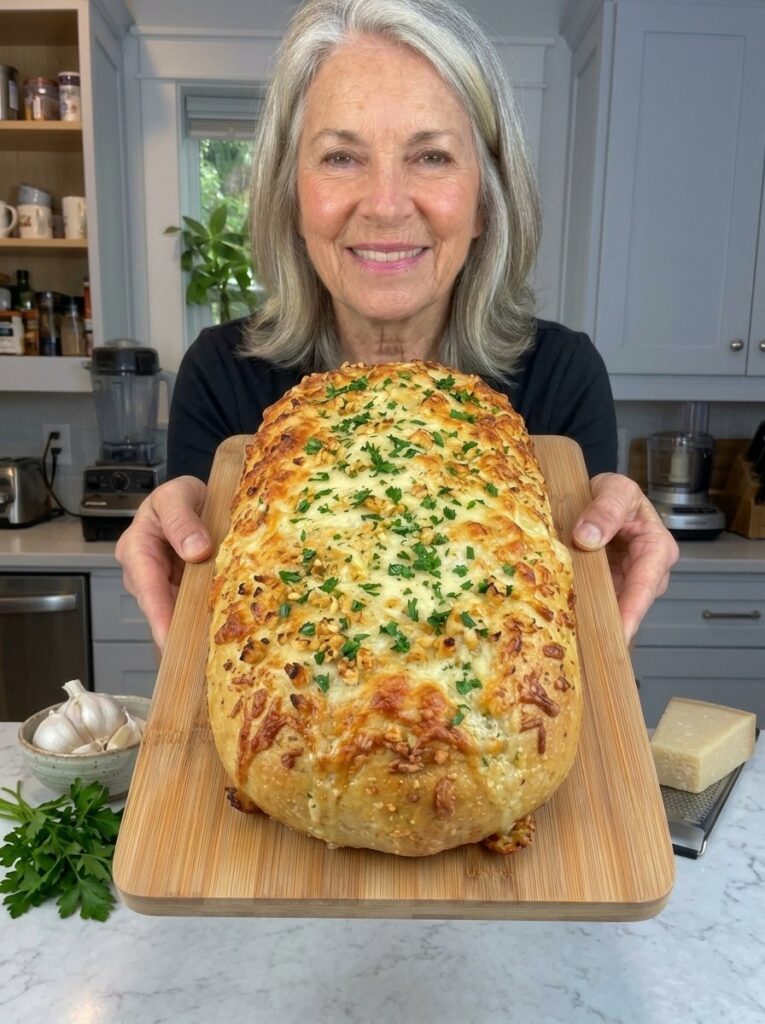
There is hardly a side dish more welcome at the dinner table than garlic bread, and this homemade garlic Parmesan bread takes the idea to a whole new level. Instead of brushing garlic butter onto store-bought bread, you bake a fresh loaf with Parmesan cheese mixed right into the dough, then finish it with a generous layer of garlic butter, fresh parsley and more melted cheese on top. The result is a soft, tender, pillowy loaf with a golden, cheesy crust and a savory aroma that fills the whole kitchen.
The recipe uses a simple yeast dough made with milk, olive oil and a touch of sugar. If you have never baked yeast bread, this is a friendly place to start. The dough is forgiving, the ingredient list is short and the payoff is huge. Slice it thick and serve it with pasta, soup or a big salad, or turn leftover slices into the best sandwiches you have ever had.
In this complete guide you will learn what garlic Parmesan bread is, why it works so well, how each ingredient contributes, how to make it step by step and how to avoid the most common mistakes. You will also find variations, serving ideas, storage tips, a recipe card and answers to the questions bakers ask most often.
What Is Garlic Parmesan Bread?
Garlic Parmesan bread is a soft yeast-raised loaf flavored with Parmesan cheese in the dough and finished with a topping of garlic butter, parsley and extra cheese. It is different from the classic garlic bread made by slicing a baguette or Italian loaf, spreading it with garlic butter and toasting it in the oven. Here, the flavor is built into the bread itself, and the garlic butter is brushed on top of the dough before baking, so the butter melts into the crust as the loaf bakes.
The Parmesan in the dough adds a salty, nutty depth and a subtle cheesy flavor to every bite of the crumb. The milk and olive oil make the crumb tender and slightly rich, while the sugar feeds the yeast and gives the crust a nice golden color. The garlic butter topping brings the classic garlic bread flavor and a glossy, fragrant finish.
The finished loaf is soft inside, with a golden, lightly crisp, buttery top. It tastes wonderful warm, and it is sturdy enough to slice, toast and use for sandwiches.
Why You’ll Love This Garlic Parmesan Bread
It is soft and tender. Milk and olive oil give the crumb a pillowy, slightly rich texture that stays soft for days.
It is loaded with flavor. Parmesan in the dough, garlic butter on top and fresh parsley deliver savory, cheesy, garlicky flavor in every slice.
It uses simple ingredients. Flour, milk, yeast, olive oil, sugar, salt, Parmesan, butter, garlic and parsley are all easy to find.
It is beginner friendly. The dough is easy to handle, and the steps are straightforward. No special equipment is required.
It is a showstopper side dish. A whole loaf of golden, buttery garlic bread looks impressive on the table.
It is versatile. Serve it with pasta, soup, salad or grilled meats, or use it for sandwiches, toast and French-toast-style savory dishes.
It makes your kitchen smell amazing. Garlic, butter, cheese and baking bread make for an irresistible aroma.
It is great for sharing. One loaf feeds a family and is always a hit at dinners and gatherings.
Ingredient Breakdown
All-Purpose Flour (3 cups)
All-purpose flour is the foundation of the dough. It has enough protein to develop a good gluten structure for a soft, chewy crumb. Measure it carefully, since too much flour leads to a dry, dense loaf. The best method is to spoon the flour into the measuring cup and level it off with a knife, rather than scooping directly from the bag, or to weigh it on a kitchen scale. Three cups of all-purpose flour typically weighs about 360 grams.
Bread flour can also be used for a slightly chewier loaf. If you use bread flour, you may need a tablespoon or two more milk.
Warm Milk (1 cup)
Milk hydrates the flour, activates the yeast and gives the bread a soft, tender crumb and a golden crust. It should feel comfortably warm to the touch, not hot, ideally around 105 to 110°F (40 to 43°C). Milk that is too hot can kill the yeast, and milk that is too cool will slow the rise. Whole milk gives the richest result, but low-fat milk also works.
Instant Yeast (2 1/4 teaspoons, 1 packet)
Instant yeast, sometimes called rapid-rise or bread machine yeast, is the leavening agent. In this recipe it is combined with warm milk and sugar for a short activation period, which confirms that it is alive and active. Check the expiration date, since old yeast is the most common reason bread fails to rise. If you only have active dry yeast, use the same amount and give it the 5 to 10 minutes in warm milk and sugar until foamy.
Olive Oil (2 tablespoons)
Olive oil enriches the dough, softens the crumb and adds a gentle fruity flavor that pairs naturally with garlic and Parmesan. A mild extra virgin olive oil works well.
Sugar (1 tablespoon)
A small amount of sugar feeds the yeast and helps the crust brown. It does not make the bread sweet. If you prefer, honey can be used in the same amount.
Salt (1 teaspoon)
Salt strengthens the gluten, controls the yeast and brings out the flavor of the bread. Do not skip it. Remember that Parmesan is also salty, so use the measured amount rather than adding extra.
Grated Parmesan Cheese (1/2 cup, plus extra for topping)
Parmesan adds a salty, nutty, savory flavor to the dough. Use finely grated Parmesan, ideally from a wedge, since freshly grated cheese has a better flavor and melts more evenly. Pre-grated Parmesan from a shaker or green can is drier and less flavorful, though it still works. Reserve extra for sprinkling on top.
Unsalted Butter (4 tablespoons, melted)
Butter is the base of the garlic topping. Melted butter carries the flavor of garlic and parsley and gives the crust a rich, golden finish. Unsalted butter lets you control the salt level.
Garlic (4 cloves, minced)
Garlic is the star of the topping. Use fresh garlic and mince it finely so that it distributes evenly through the butter. Fresh garlic has a brighter, more pungent flavor than powder. Be aware that small pieces of garlic can brown or burn on the surface of the loaf in the oven, so keep an eye on the top while baking.
Fresh Parsley (2 tablespoons, chopped)
Fresh parsley adds color, a fresh herbal aroma and a pop of green against the golden butter. Flat-leaf Italian parsley has the best flavor.
Shredded Mozzarella (1/4 cup, optional)
Mozzarella adds a gooey, melty, cheesy finish to the top of the loaf. It is optional, but it makes the bread even more indulgent.
Equipment You Will Need
- A large mixing bowl
- A wooden spoon or dough scraper
- A clean work surface for kneading, or a stand mixer with a dough hook
- A loaf pan (about 9 x 5 inches)
- A small bowl for the garlic butter
- A pastry brush
- A wire rack for cooling
- A kitchen thermometer (optional, but helpful for checking doneness)
How to Make Garlic Parmesan Bread (Step by Step)
Step 1: Activate the Yeast
In a large bowl, combine the warm milk, sugar and instant yeast. Stir gently and let the mixture stand for about 5 minutes. It should become slightly foamy or bubbly on top, which shows the yeast is active. If nothing happens, the yeast may be old or the milk may have been too hot or too cold, and you should start over with fresh yeast and correctly warmed milk.
Step 2: Make the Dough
Add the flour, salt, olive oil and grated Parmesan to the yeast mixture. Mix with a wooden spoon or your hands until a shaggy dough forms and no dry flour remains.
Step 3: Knead
Turn the dough onto a lightly floured surface and knead for 8 to 10 minutes, until it becomes smooth and elastic. The dough should feel soft and slightly tacky but not sticky. If it sticks to your hands or the surface, add a tablespoon of flour at a time. If it feels stiff and dry, add a teaspoon of milk at a time. If you use a stand mixer, knead on low to medium speed with the dough hook for about 6 to 8 minutes.
Step 4: First Rise
Place the dough in a lightly oiled bowl, turn it once to coat, cover it with a damp towel or plastic wrap and let it rise in a warm place for 60 to 90 minutes, or until doubled in size. Rising time depends on the temperature of your kitchen.
Step 5: Shape and Second Rise
Gently press the air out of the dough, then shape it into a loaf by flattening it into a rectangle and rolling it up tightly, pinching the seam closed. Place it seam-side down in a greased loaf pan. Cover and let it rise for another 25 to 30 minutes, until the dough crowns slightly above the rim of the pan.
Step 6: Prepare the Garlic Butter
While the dough rises for the second time, preheat your oven to 375°F (190°C). In a small bowl, mix the melted butter, minced garlic and chopped parsley. Set aside about one quarter of the garlic butter for brushing on after baking.
Step 7: Add the Topping
Gently brush the top of the dough with the garlic butter. Sprinkle with extra Parmesan and the mozzarella, if using. Be gentle, since the risen dough is delicate and can deflate if you press too hard.
Step 8: Bake
Bake at 375°F (190°C) for 25 to 35 minutes, until the loaf is golden brown and cooked through. The bread should sound hollow when tapped on the top, and the internal temperature should reach about 190 to 200°F (88 to 93°C). If the top browns too quickly, loosely cover it with foil for the last 10 minutes.
Step 9: Finish and Serve
Brush the warm loaf with a little extra garlic butter. Let it cool in the pan for a few minutes, then transfer it to a wire rack. Cool slightly, slice and enjoy. For a crispier crust, return the loaf to the oven for another 2 to 3 minutes after adding the final Parmesan topping.
Expert Tips for the Best Garlic Parmesan Bread
Use freshly minced garlic. Fresh garlic gives the best flavor. Mince it finely so it distributes evenly and does not leave large, bitter pieces on the crust.
Check your yeast. The foamy activation step confirms the yeast is alive. Old yeast leads to a flat, dense loaf.
Keep the milk warm, not hot. Milk above about 120°F (49°C) can kill the yeast. It should feel comfortably warm on your wrist.
Do not add too much flour. The dough should be soft and slightly tacky. Too much flour makes the loaf dry and dense.
Knead until elastic. A properly kneaded dough springs back slowly when poked and passes the windowpane test, stretching thin without tearing.
Be patient with the rise. Let the dough double in size rather than relying only on the clock. A warm spot speeds the rise, and a cooler spot slows it.
Brush gently. Risen dough is delicate. Use a light touch with the pastry brush to avoid deflating it.
Watch the garlic on top. If the garlic or cheese on top browns too quickly, cover the loaf loosely with foil for the rest of the baking time.
Save butter for the finish. Brushing the hot loaf with garlic butter after baking adds shine and a fresh garlic aroma.
Check doneness properly. A hollow sound and an internal temperature of about 190 to 200°F (88 to 93°C) signal a fully baked loaf.
Cool before slicing. Letting the loaf rest for a few minutes prevents squashing and gives cleaner slices.
Delicious Variations
Extra cheesy version. Fold shredded mozzarella or cheddar into the dough, or sprinkle extra mozzarella on top, for a gooey, cheese-pull loaf.
Roasted garlic bread. Replace the raw garlic with roasted garlic cloves, mashed into the butter, for a sweeter, mellower flavor.
Italian herb loaf. Add a teaspoon of dried Italian seasoning, oregano or basil to the dough or the garlic butter.
Spicy garlic Parmesan bread. Add a pinch of red pepper flakes to the garlic butter for gentle heat.
Pull-apart version. Cut the dough into pieces, dip each in garlic butter and layer them in the pan for a pull-apart loaf.
Garlic Parmesan rolls. Divide the dough into 10 to 12 pieces, shape into rolls and bake for about 18 to 22 minutes, brushing with garlic butter before and after baking.
Whole-wheat blend. Replace up to a third of the all-purpose flour with whole-wheat flour for a nuttier, heartier loaf. You may need a little extra milk.
Focaccia-style version. Press the dough into a greased pan, dimple it with your fingers, top with the garlic butter and Parmesan and bake for a flat, chewy garlic bread.
Keep in mind that extra mix-ins change the moisture balance, so add them in small amounts.
What to Serve With Garlic Parmesan Bread
This bread is made for sharing with a meal:
- Pasta dishes: Serve alongside spaghetti, lasagna, baked ziti or fettuccine Alfredo to mop up the sauce.
- Soups: Pair with tomato soup, creamy mushroom soup, minestrone or vegetable soup.
- Salads: Serve with a Caesar salad, Greek salad or a simple green salad.
- Sandwiches: Use slices to make grilled cheese, meatball subs or turkey sandwiches.
- Eggs: Toast a slice and serve it with scrambled or fried eggs for a savory breakfast.
- Dips: Dip pieces into marinara sauce, olive oil and balsamic vinegar or warm cheese dip.
- Grilled meats and stews: Serve with roast chicken, steak, chili or beef stew.
- Snack plate: Enjoy warm slices on their own as a cozy snack.
Storage and Make-Ahead Tips
At room temperature: Store the cooled loaf in an airtight container at room temperature for up to 2 days.
In the refrigerator: For longer storage, refrigerate the bread in an airtight container for up to 5 days. Refrigeration can dry out bread, so wrap it well.
Reheating: Reheat slices or the whole loaf in the oven to bring back that delicious crust. Wrap the loaf loosely in foil and warm it in a 350°F (175°C) oven for about 10 minutes, then unwrap for the last few minutes to crisp the crust. Slices need only about 5 minutes.
In the freezer: For even longer storage, slice the cooled loaf and freeze the slices in a freezer-safe bag for up to 3 months. Reheat slices straight from frozen in the oven or toaster.
Make-ahead tip: After kneading, you can let the dough do its first rise slowly in the refrigerator overnight. Bring it back to room temperature, shape it and finish the second rise before adding the topping and baking.
Recipe Card: Garlic Parmesan Bread
Prep time: 25 minutes Rising time: About 90 to 120 minutes in total Bake time: 25 to 35 minutes Servings: About 10 to 12 slices Course: Bread, side Cuisine: Italian-inspired
Ingredients
For the bread:
- 3 cups all-purpose flour
- 1 cup warm milk
- 2 1/4 teaspoons instant yeast (1 packet)
- 2 tablespoons olive oil
- 1 tablespoon sugar
- 1 teaspoon salt
- 1/2 cup grated Parmesan cheese
For the garlic butter:
- 4 tablespoons unsalted butter, melted
- 4 garlic cloves, minced
- 2 tablespoons chopped fresh parsley
- 1/4 cup shredded mozzarella cheese (optional)
- Extra grated Parmesan for topping
Instructions
- In a large bowl, combine the warm milk, sugar and instant yeast. Let stand for about 5 minutes.
- Add the flour, salt, olive oil and grated Parmesan. Mix until a dough forms.
- Knead for 8 to 10 minutes until the dough becomes smooth and elastic.
- Place the dough in a lightly oiled bowl, cover and let rise in a warm place for 60 to 90 minutes, or until doubled in size.
- Shape the dough into a loaf and place it in a greased loaf pan. Cover and let rise for another 25 to 30 minutes.
- Mix the melted butter, minced garlic and chopped parsley in a small bowl.
- Brush the top of the dough with garlic butter. Sprinkle with extra Parmesan and mozzarella if desired.
- Bake at 375°F (190°C) for 25 to 35 minutes, until golden brown and cooked through.
- Brush with a little extra garlic butter while warm. Let cool slightly, slice and enjoy.
Frequently Asked Questions
Can I use active dry yeast instead of instant yeast?
Yes. Use the same amount and let it stand in the warm milk and sugar for 5 to 10 minutes until foamy before adding the other ingredients. The rise may take slightly longer.
Why did my dough not rise?
The most common causes are old or dead yeast, milk that was too hot or too cold, a kitchen that is too cool or too little rising time. Check the expiration date on your yeast, use comfortably warm milk and give the dough enough time to double in size.
Can I use bread flour?
Yes. Bread flour gives a slightly chewier, taller loaf. You may need an extra tablespoon or two of milk, since bread flour absorbs more liquid.
Can I use pre-grated Parmesan?
Yes, but freshly grated Parmesan has a better flavor and melts more evenly. Pre-grated Parmesan from a shaker is drier and milder.
Can I use garlic powder instead of fresh garlic?
Fresh garlic gives the best flavor. If you only have garlic powder, use about 1 teaspoon mixed into the melted butter, though the flavor will be milder and less aromatic.
Why is the garlic on top turning dark?
Small pieces of garlic can brown quickly in a hot oven. If the top is darkening too fast, cover the loaf loosely with foil for the rest of the baking time. Mincing the garlic finely and mixing it well into the butter also helps it brown more evenly.
Why is my bread dense?
Density usually comes from adding too much flour, underkneading, too little rising time or old yeast. Keep the dough soft and slightly tacky, knead until elastic and let it rise until doubled.
How do I know when the bread is done?
The loaf should be golden brown and sound hollow when you tap the top. The internal temperature should reach about 190 to 200°F (88 to 93°C).
Can I make this bread ahead of time?
Yes. Bake it in advance and reheat it in the oven before serving, or let the dough rise slowly in the refrigerator overnight and bake it the next day.
Can I make it dairy-free or vegan?
The recipe contains milk, butter and Parmesan, so substituting them would change the flavor and texture significantly. If you try plant-based milk, olive oil or vegan butter and a vegan cheese, expect different results.
Is this bread gluten-free?
No. It is made with wheat flour and contains gluten.
Can I turn this recipe into rolls?
Yes. Divide the dough into 10 to 12 pieces after the first rise, shape them into balls, place them in a greased baking dish, let them rise until puffy and bake for about 18 to 22 minutes. Brush with garlic butter before and after baking.
Final Thoughts
This garlic Parmesan bread proves that the best garlic bread is the one you bake from scratch. With a soft, cheese-flavored dough and a buttery garlic-herb topping, it delivers the flavors everyone loves in a tender, golden loaf. It is easy enough for beginners, impressive enough for guests and perfect for pasta night, soup season and cozy family dinners.
Mince plenty of fresh garlic, be generous with the Parmesan and serve the loaf warm. One slice, and you will understand why this recipe is a favorite.
Print
Garlic Parmesan Bread: Buttery, Cheesy and Irresistibly Golden
Description
Prep time: 25 minutes Rising time: About 90 to 120 minutes in total Bake time: 25 to 35 minutes Servings: About 10 to 12 slices Course: Bread, side Cuisine: Italian-inspired
Ingredients
- 3 cups all-purpose flour
- 1 cup warm milk
- 2 1/4 teaspoons instant yeast (1 packet)
- 2 tablespoons olive oil
- 1 tablespoon sugar
- 1 teaspoon salt
- 1/2 cup grated Parmesan cheese
For the garlic butter:
- 4 tablespoons unsalted butter, melted
- 4 garlic cloves, minced
- 2 tablespoons chopped fresh parsley
- 1/4 cup shredded mozzarella cheese (optional)
- Extra grated Parmesan for topping
Instructions
- In a large bowl, combine the warm milk, sugar and instant yeast. Let stand for about 5 minutes.
- Add the flour, salt, olive oil and grated Parmesan. Mix until a dough forms.
- Knead for 8 to 10 minutes until the dough becomes smooth and elastic.
- Place the dough in a lightly oiled bowl, cover and let rise in a warm place for 60 to 90 minutes, or until doubled in size.
- Shape the dough into a loaf and place it in a greased loaf pan. Cover and let rise for another 25 to 30 minutes.
- Mix the melted butter, minced garlic and chopped parsley in a small bowl.
- Brush the top of the dough with garlic butter. Sprinkle with extra Parmesan and mozzarella if desired.
- Bake at 375°F (190°C) for 25 to 35 minutes, until golden brown and cooked through.
- Brush with a little extra garlic butter while warm. Let cool slightly, slice and enjoy.