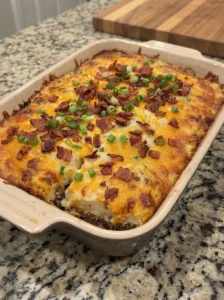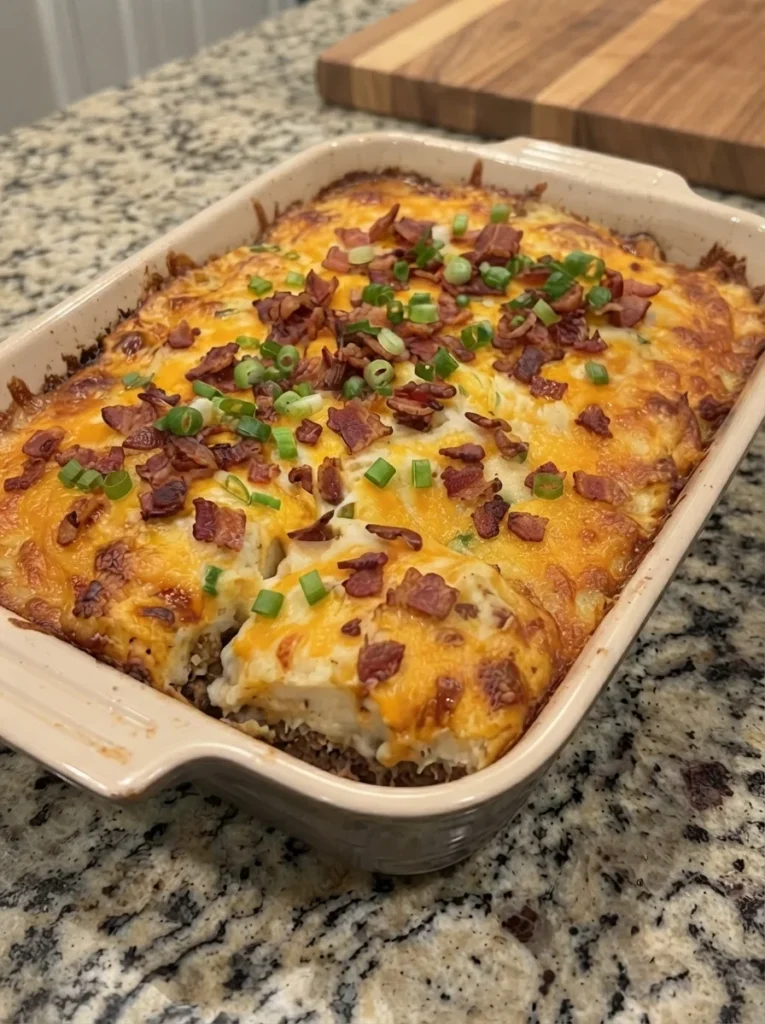
Cheesy Loaded Meatloaf Casserole combines a savory meatloaf base with creamy mashed potatoes, melted cheddar, and crisp bacon. It brings the familiar flavors of meatloaf and a loaded baked potato together in one baking dish, with green onions adding a fresh finish.
The meat is baked first and drained before the potatoes are added. That extra stage keeps the topping from sitting in rendered fat and makes it easier to check that the beef is cooked through. A short second bake warms the layers together and melts the cheese without requiring the mashed potatoes to spend the entire cooking time in the oven.
Serve it with green beans, roasted broccoli, or a crisp salad for a hearty family dinner. Leftovers portion neatly once chilled and can be reheated for another meal.
This is a suggested recipe developed from the supplied title and has not been kitchen-tested. Baking times are starting points: the thickness of the meat layer, baking dish, and starting temperature of the ingredients all affect the result.
Recipe Overview
- Yield: One 9 × 13-inch casserole
- Servings: 8
- Active preparation: About 30 minutes
- Baking: About 40–55 minutes
- Resting: 10 minutes
- Total: About 1 hour 15 minutes to 1 hour 35 minutes, with potatoes and bacon prepared during the first bake
- Oven temperature: 375°F
The finished casserole has a tender, cohesive meat layer beneath a soft potato topping. It is hearty and scoopable, with cleaner portions after a short rest. Expect a little shrinkage around the meat as it cooks.
Why the Layers Work Together
Breadcrumbs soaked with milk help keep the meatloaf tender. Egg binds the mixture, while onion, Worcestershire sauce, ketchup, and simple seasonings give it a classic meatloaf flavor.
The potatoes are mashed separately so you can control their consistency before spreading them over the meat. They should be creamy but thick enough to hold a spoon mark. A loose, pourable mash can slide into the gaps around the cooked meat and make serving messy.
Cheddar provides a rich topping, and cooked bacon adds smoky flavor. Most of the bacon goes on after baking so it stays crisp. Green onions are also added at the end for a fresher contrast.
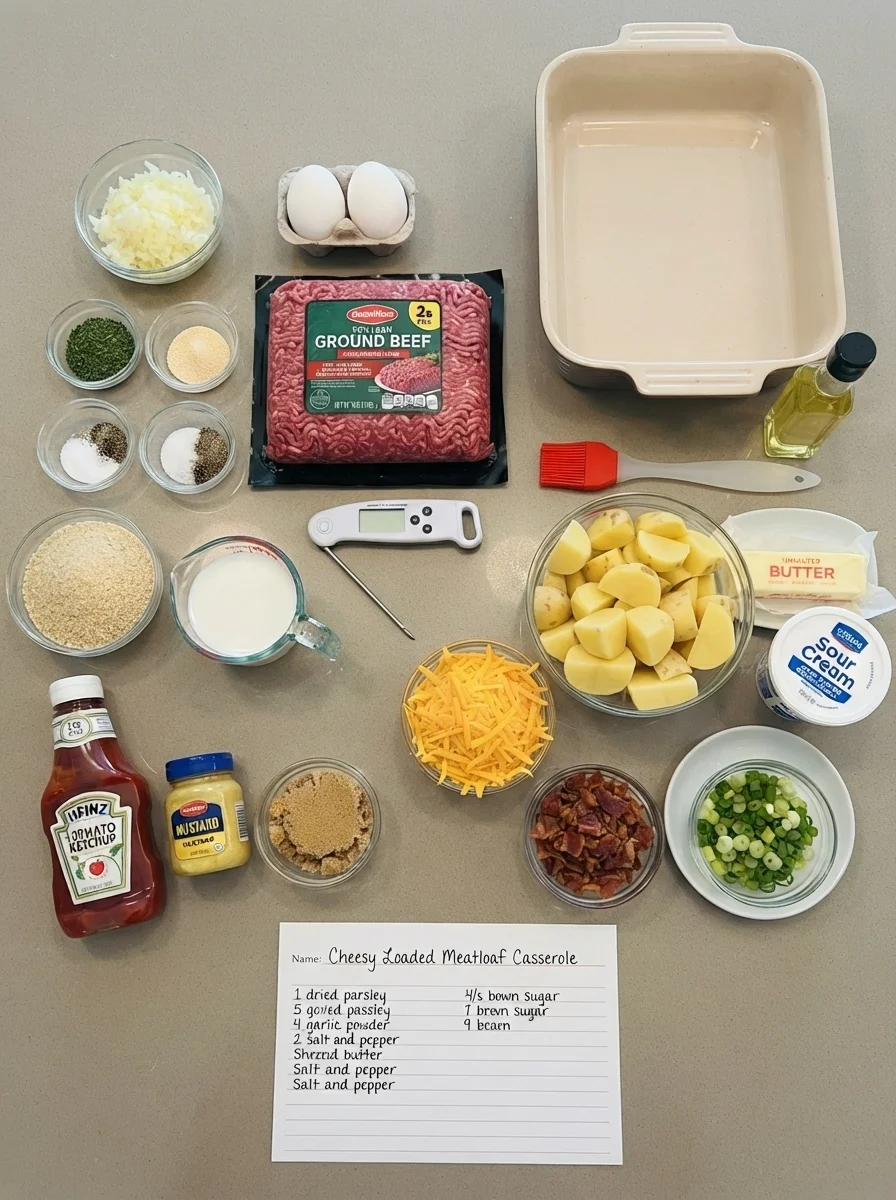
Ingredients
Meatloaf Base
- 2 pounds ground beef, preferably 90% lean
- ¾ cup plain dry breadcrumbs
- ⅓ cup milk
- 2 large eggs
- 1 small yellow onion, finely grated or very finely minced, about ½ cup
- ¼ cup ketchup
- 1 tablespoon Worcestershire sauce
- 1 teaspoon garlic powder
- 1 teaspoon dried parsley
- ¾ teaspoon fine salt
- ½ teaspoon black pepper
- Neutral oil or cooking spray, for the baking dish
Mashed Potato Layer
- 3 pounds Yukon Gold or russet potatoes, peeled and cut into even chunks
- 4 tablespoons unsalted butter
- ½ cup sour cream
- ¼–½ cup warm milk, added gradually as needed
- ½ teaspoon fine salt, plus salt for the potato cooking water if desired
- ¼ teaspoon black pepper
Loaded Topping
- 2 cups shredded sharp cheddar, divided
- 6 slices bacon, cooked crisp and crumbled
- ¼ cup sliced green onions
- Extra sour cream, optional, for serving
Optional Tangy Glaze
- ¼ cup ketchup
- 1 tablespoon brown sugar
- 1 teaspoon yellow mustard
The glaze is optional. It adds a familiar sweet-and-tangy meatloaf note beneath the potatoes, but the casserole is still flavorful without it. It is not included in the base nutrition estimate.
Ingredient Notes
Choose Beef That Is Not Too Fatty
A 90% lean blend is a practical choice because it limits the amount of grease released beneath the topping. An 85% lean blend can work, but you may need to drain more liquid after the first bake.
Very lean beef can be less forgiving if overmixed or overbaked. Keep the soaked breadcrumbs and avoid pressing the meat into a densely compacted slab.
Use Fine Onion Pieces
Large raw onion chunks can stay firm during baking and make the base harder to slice. Grating the onion distributes it throughout the meat. Add the moist grated onion, but leave behind a large puddle of excess liquid if one collects on the board.
If you prefer cooked onion, sauté finely diced onion until softened, let it cool, and then add it to the mixture. This is an optional preparation change rather than a required step.
Breadcrumbs Help the Texture
Plain dry breadcrumbs give a predictable starting point. Panko has a different volume and texture, while fresh breadcrumbs contain more moisture. Substituting either may require adjustment.
For a gluten-free version, use appropriate gluten-free breadcrumbs and verify that the Worcestershire sauce and other packaged ingredients meet your needs. The standard recipe is not gluten-free as written.
Pick Potatoes for Mashing
Yukon Gold potatoes give a naturally buttery texture. Russets can make a fluffier topping when drained well. Either works, but avoid overprocessing them, which can make the mash sticky.
Use a potato masher or ricer rather than a blender or food processor. Add warm milk gradually so you can stop before the topping becomes too loose.
Cook the Bacon Separately
Raw bacon scattered over the casserole will not reliably become crisp during the short finishing bake. Cook it first, drain it, and crumble it before topping the dish.
Thick-cut bacon can be used, but six thick slices contribute more bacon than six thin slices. Choose the amount that suits your taste and account for the difference when estimating nutrition.
Equipment
Use a 9 × 13-inch baking dish with sides about 2 inches high, a large pot for the potatoes, a mixing bowl, a masher or ricer, and a spatula. You will also need a skillet or baking sheet for the bacon and an instant-read food thermometer.
A baster or large spoon helps remove rendered fat from the meat layer. Keep a heat-safe container nearby for the drained liquid. Do not pour hot grease down the sink.
If using glass or ceramic, follow the manufacturer’s temperature and handling instructions. Avoid putting a cold dish into a hot oven unless the manufacturer explicitly permits it, and never place a hot dish on a wet or cold surface.
How to Make Cheesy Loaded Meatloaf Casserole
1. Prepare the Oven and Baking Dish
Heat the oven to 375°F. Lightly grease the baking dish and set it on a stable surface.
Have the potato ingredients measured and the bacon ready to cook. Preparing these while the meat bakes keeps the overall process manageable.
2. Soak the Breadcrumbs
Stir together the breadcrumbs and ⅓ cup milk in a large bowl. Let stand for about 5 minutes while you prepare the onion.
The mixture will look damp and thick. This soaked breadcrumb mixture helps distribute moisture through the beef rather than leaving dry crumbs in the finished base.
3. Mix the Meatloaf Base
Add the eggs, onion, ketchup, Worcestershire sauce, garlic powder, parsley, salt, and pepper to the soaked breadcrumbs. Stir these ingredients together before adding the beef.
Add the ground beef and mix gently with clean hands or a sturdy fork just until evenly combined. Stop once the seasonings are distributed; prolonged squeezing and stirring can make the texture dense.
Do not taste the raw mixture. If you want to assess the seasoning, cook a small separate portion thoroughly before tasting.
4. Spread and Bake the Meat
Transfer the mixture to the prepared dish. Pat it into an even layer, reaching toward the corners without packing it tightly. Even thickness helps the center and edges cook at a similar rate.
Bake uncovered for about 25–35 minutes, beginning to check at 25 minutes. The ground beef layer must reach 160°F in the center before adding the potato topping. Insert the thermometer into the meat without touching the bottom of the dish, and check more than one location.
If it has not reached temperature, continue baking in short increments and check again. Brown edges or clear-looking juices alone do not confirm doneness.
5. Cook and Mash the Potatoes
While the meat bakes, place the potato chunks in a large pot and cover with cold water by about an inch. Add a modest amount of salt if desired. Bring to a boil, reduce to a steady simmer, and cook until the pieces are easily pierced with a fork, usually about 15–20 minutes after the water begins simmering.
Drain thoroughly. Return the potatoes to the warm pot for a minute or two off the heat so excess moisture can evaporate.
Mash with the butter, then stir in sour cream, ¼ cup warm milk, salt, and pepper. Add more milk a little at a time only if needed. Fold in ½ cup of the cheddar, reserving 1½ cups for the top.
The finished potatoes should spread easily but remain thick. Keep them warm while the beef finishes cooking.
6. Cook the Bacon
Cook the bacon until crisp using your preferred skillet or oven method. Drain on paper towels, then crumble or chop when cool enough to handle.
If preparing bacon in the oven at the same time as the meat, use a separate rimmed pan and allow space for airflow. Monitor both dishes; their cooking times will differ.
7. Drain the Meat Layer Carefully
Remove the fully cooked meat base from the oven. Use a spoon or baster to remove pooled fat and liquid from the edges into a heat-safe container.
Avoid tilting a heavy dish full of hot meat and grease. The meat may shrink away from the sides, which is normal. You do not need to fill that gap with liquid.
Removing the pooled juices helps keep the casserole from becoming greasy, but do not press or squeeze the meat to extract every bit of moisture.
8. Add the Optional Glaze
If using the glaze, stir its ingredients together and spread a thin layer over the cooked meat. Keep it thin enough that it does not create a slippery pool beneath the potatoes.
You can also leave the glaze out and offer ketchup at the table. The seasoned meat already includes a small amount of ketchup for flavor.
9. Add Potatoes and Cheese
Dollop the warm mashed potatoes over the meat in several places. Gently connect the dollops with a spatula rather than dragging one large mound across the surface.
Spread into an even layer. Sprinkle with the remaining 1½ cups cheddar and about half the cooked bacon.
Do not press firmly enough to compact the meat underneath. Shallow ridges in the potatoes are fine and can give the topping a more rustic appearance.
10. Finish Baking
Return the casserole to the oven for about 15–20 minutes, until the cheese is melted and the layers are hot throughout. The first-bake instructions already require the beef to be fully cooked; this stage finishes the assembled casserole.
If using chilled make-ahead components, follow the separate reheating guidance below rather than assuming this short finishing time is enough.
There is no need to broil the casserole. Many glass and ceramic dishes are not broiler-safe, and the cheese can brown before the middle warms. A melted, gently bubbling topping is sufficient.
11. Rest and Serve
Let the dish rest for 10 minutes. Sprinkle with the remaining bacon and sliced green onions.
Cut into eight portions with a spatula, or serve generous scoops. Offer extra sour cream on the side. The casserole is softer when very hot and becomes easier to portion as it rests.
Tips for a Better Casserole
Mix the seasonings into the soaked breadcrumbs before adding the beef. This reduces how much you need to work the meat to distribute everything evenly.
Keep the meat layer consistent in thickness. A thick mound in the center can lag behind the edges and make temperature checks confusing.
Drain the potatoes thoroughly. Watery potatoes make a loose topping, and extra time in the oven does not always restore a pleasant texture once they are spread over the meat.
Warm the milk before adding it to the mash. Cold milk cools the potatoes and can mean the assembled casserole needs more time to heat through.
Reserve some bacon for after baking. Bacon buried beneath melted cheese will soften, while a final sprinkle provides the crisp contrast that makes the topping feel loaded.
Allow the casserole to rest before serving. This is not a guarantee of perfect squares, but it helps the layers settle and keeps the first portion from collapsing immediately.
Troubleshooting
| Problem | Likely cause | Adjustment |
|---|---|---|
| Meat layer is dense | Overmixing or packing firmly | Mix only until combined and pat lightly into the dish. |
| Grease pools around the topping | Fatty beef or missed draining stage | Use leaner beef and remove pooled liquid before adding potatoes. |
| Mashed potatoes are runny | Incomplete draining or too much milk | Steam-dry potatoes briefly and add milk gradually. |
| Potatoes feel gluey | Overworking or blending | Use a masher or ricer and fold gently. |
| Center is undercooked | Meat layer is uneven or baking time was too short | Check multiple locations for 160°F before topping. |
| Cheese browns before the center warms | Chilled components or excessive heat | Cover loosely and continue at the stated temperature; verify the center. |
| Portions fall apart | Casserole is very hot or topping is loose | Rest for 10 minutes and use a broad spatula. |
| Flavor is too salty | Salty bacon, cheese, and added salt | Season the potatoes modestly and account for packaged ingredients. |
Variations
Barbecue Meatloaf Casserole
Replace the optional ketchup glaze with a thin layer of barbecue sauce. Choose a sauce whose sweetness you enjoy and avoid adding enough to pool beneath the potatoes.
Jalapeño Cheddar
Add a small amount of finely diced jalapeño to the potatoes or scatter well-drained pickled slices over the finished casserole. Start lightly; the creaminess can soften the perception of heat but does not remove it.
Garlic Mashed Potato Topping
Mash a few soft roasted garlic cloves into the potatoes. Avoid adding large pieces of raw garlic to the topping, where they may remain sharp during the finishing bake.
Ground Turkey Version
Ground turkey changes the flavor and can be leaner or drier depending on the blend. Cook the turkey base to 165°F before topping. Keep the soaked breadcrumbs, and do not assume the beef timing will be identical.
Extra Vegetables
Serve vegetables on the side for the most predictable structure. If adding mushrooms or other moisture-rich vegetables to the meat mixture, cook and drain them first. Large quantities alter the binder and moisture balance, so this is not a direct cup-for-cup substitution for beef.
Lower-Carbohydrate Topping
A thick cauliflower mash can replace the potatoes as a separate variation, but drain it very well. Breadcrumbs and ketchup still contribute carbohydrates, and the standard recipe should not be described as keto.
Serving Ideas
Green beans, broccoli, asparagus, or a simple cabbage slaw pair well with the rich cheese and bacon. A salad with a sharp vinaigrette gives a fresh contrast to the creamy potatoes.
For a family dinner, serve one portion per person and let guests add sour cream, ketchup, or green onions at the table. The casserole already includes both a meat and a potato component, so another substantial starch is optional.
For a larger gathering, bake separate dishes rather than making one much deeper casserole. A deeper meat layer changes the baking time and makes it harder to cook the center without drying the edges.
Make-Ahead Options
Prepare Components Separately
For the best control, cook the meat base and mashed potatoes up to a day ahead, refrigerating them promptly in shallow containers. Store bacon separately so it stays as crisp as possible.
When ready to assemble, reheat the potatoes gently until spreadable. Add them to the cooked meat base, top with cheese, and bake covered at 350°F until the center reaches 165°F. Remove the cover near the end to melt and finish the cheese if needed.
A chilled assembled casserole may take about 35–50 minutes or longer depending on the dish and how cold it starts. Treat that as a planning range and rely on the center temperature.
Assemble Ahead
You can assemble with cooked components and refrigerate promptly, but the layers may exchange moisture during storage. Add the final bacon and green onions only after reheating.
Follow your dish manufacturer’s instructions about moving between refrigerator and oven. Use a metal pan appropriate for that transition if you need a direct refrigerator-to-oven method.
Use Leftover Mashed Potatoes
About 5–6 cups of thick prepared mashed potatoes is a useful starting amount for the topping. The exact yield from fresh potatoes varies, so aim for an even layer rather than forcing in a fixed amount.
Reheat leftover potatoes thoroughly and assess their consistency before using. Do not add the full butter, sour cream, and milk quantities again if the potatoes are already seasoned and enriched. Using leftovers does not restart their original storage clock.
Storage and Reheating
Refrigerate leftovers within 2 hours of cooking, or within 1 hour if temperatures exceed 90°F. Divide into shallow airtight containers rather than leaving a large hot casserole on the counter to cool completely.
Keep refrigerated at 40°F or below and use within 3–4 days. Label the containers so the preparation date is clear.
For individual portions, microwave covered loosely in intervals, rotating or stirring the potato layer as needed for even heating. Check that the center reaches 165°F. Add fresh green onions after reheating.
For several portions, cover an oven-safe dish and warm at 350°F until the center reaches 165°F. A small splash of milk over a dry potato surface can help, but do not add enough to flood the meat layer.
Freeze well-wrapped portions for up to 2 months for best quality. Thaw in the refrigerator before reheating. Potatoes containing sour cream can change texture after thawing; stir the topping lightly if needed and expect a softer result than freshly made casserole.
Freeze without fresh green onions and, when practical, add a fresh sprinkle of bacon after reheating. Discard perishable portions that have been left out beyond the recommended time limits.
Nutrition Estimate
A broad estimate is approximately 550–680 calories and 33–40 grams of protein per serving, based on eight portions, lean beef, and the stated potato, bacon, and cheese amounts. The optional glaze and serving sour cream add to that estimate.
These are illustrative figures, not a calculated nutrition label. Beef fat content, drained fat, cheese measurement, bacon thickness, and portion size all affect the result. Use the labels on your ingredients for more precise tracking.
The standard recipe contains dairy, eggs, and wheat. Worcestershire sauce may contain fish. Check individual labels when cooking for allergies or dietary restrictions.
Frequently Asked Questions
Can I put the potatoes over raw meat and bake everything together?
This method does not recommend it. Baking the meat first allows you to verify doneness and remove rendered fat before adding the topping. Covering raw meat with potatoes makes those checks less convenient.
Can I use instant mashed potatoes?
You can use prepared instant mashed potatoes as a convenience variation. Make them thick rather than pourable and season to taste. Use enough for an even topping, about 5–6 cups, and do not automatically add all the dairy listed for the from-scratch mash.
Why did the meat shrink away from the dish?
Ground beef releases fat and moisture as it cooks. Some shrinkage is normal. Drain the pooled liquid and spread the topping over the meat rather than trying to refill every gap.
Can I leave out the bacon?
Yes. The casserole will still have a cheddar-potato topping. Add green onions after baking for freshness, and adjust the nutrition estimate accordingly.
Can I use a smaller dish?
A smaller dish makes the layers thicker and changes the cooking time. The recipe is written for a 9 × 13-inch dish. For a smaller batch, halve the ingredients and use an appropriately sized dish while still checking the meat and reheating temperatures.
How do I get clean slices?
Use a thick potato topping, drain the meat layer, and let the finished casserole rest. A broad spatula helps. Chilled leftovers slice more cleanly than a freshly baked casserole, but the dish is intended to remain tender rather than firm like a terrine.
Can I double it?
Use two 9 × 13-inch dishes rather than one very deep pan. Check each dish separately because oven position and airflow can affect timing.
Recipe Card
Cheesy Loaded Meatloaf Casserole
A seasoned beef meatloaf base topped with creamy mashed potatoes, cheddar, bacon, and green onions.
Yield: One 9 × 13-inch casserole
Servings: 8
Prep: About 30 minutes
Bake: 40–55 minutes
Rest: 10 minutes
Total: About 1 hour 15 minutes to 1 hour 35 minutes with overlapping preparation
Oven: 375°F
Ingredients
Meat base
- 2 pounds 90% lean ground beef
- ¾ cup plain dry breadcrumbs
- ⅓ cup milk
- 2 large eggs
- 1 small onion, grated or finely minced, about ½ cup
- ¼ cup ketchup
- 1 tablespoon Worcestershire sauce
- 1 teaspoon garlic powder
- 1 teaspoon dried parsley
- ¾ teaspoon fine salt
- ½ teaspoon black pepper
- Oil or cooking spray for the dish
Potatoes and topping
- 3 pounds potatoes, peeled and cubed
- 4 tablespoons unsalted butter
- ½ cup sour cream
- ¼–½ cup warm milk, as needed
- ½ teaspoon fine salt, plus optional salt for cooking water
- ¼ teaspoon black pepper
- 2 cups shredded sharp cheddar, divided
- 6 slices bacon, cooked crisp and crumbled
- ¼ cup sliced green onions
Optional glaze
- ¼ cup ketchup
- 1 tablespoon brown sugar
- 1 teaspoon yellow mustard
Instructions
- Heat oven to 375°F. Lightly grease a 9 × 13-inch baking dish.
- Soak breadcrumbs in ⅓ cup milk for 5 minutes. Stir in eggs, onion, ketchup, Worcestershire, garlic powder, parsley, salt, and pepper. Add beef and mix gently just until combined.
- Pat into an even layer in the dish. Bake uncovered about 25–35 minutes, or until the center reaches 160°F in several locations. Continue baking as needed to reach temperature.
- Meanwhile, simmer potatoes in water until fork-tender, about 15–20 minutes after simmering begins. Drain well and let excess moisture evaporate briefly.
- Mash with butter, sour cream, ¼ cup warm milk, salt, and pepper. Add more milk only as needed for a thick, spreadable mash. Fold in ½ cup cheddar.
- Carefully spoon or baste pooled fat and liquid from the cooked meat. If using glaze, mix and spread it thinly over the meat.
- Dollop potatoes over the meat and spread gently. Top with remaining 1½ cups cheddar and half the bacon.
- Bake another 15–20 minutes, until the cheese melts and the casserole is hot throughout. Rest 10 minutes. Add remaining bacon and green onions before serving.
Make-ahead: Chilled cooked components need a longer covered reheating stage; heat the assembled casserole to 165°F throughout.
Storage: Refrigerate promptly in shallow containers and use within 3–4 days. Reheat leftovers to 165°F. Freeze portions for up to 2 months for best quality.
Estimated nutrition: About 550–680 calories per serving at eight servings, before optional glaze and serving toppings.
Development note: Suggested formula developed from the title; not kitchen-tested. Use temperature and texture cues to adjust timing.
Print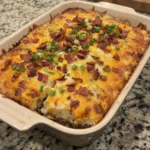
Cheesy Loaded Meatloaf Casserole
Description
A seasoned beef meatloaf base topped with creamy mashed potatoes, cheddar, bacon, and green onions.
Yield: One 9 × 13-inch casserole
Servings: 8
Prep: About 30 minutes
Bake: 40–55 minutes
Rest: 10 minutes
Total: About 1 hour 15 minutes to 1 hour 35 minutes with overlapping preparation
Oven: 375°F
Ingredients
Meat base
- 2 pounds 90% lean ground beef
- ¾ cup plain dry breadcrumbs
- ⅓ cup milk
- 2 large eggs
- 1 small onion, grated or finely minced, about ½ cup
- ¼ cup ketchup
- 1 tablespoon Worcestershire sauce
- 1 teaspoon garlic powder
- 1 teaspoon dried parsley
- ¾ teaspoon fine salt
- ½ teaspoon black pepper
- Oil or cooking spray for the dish
Potatoes and topping
- 3 pounds potatoes, peeled and cubed
- 4 tablespoons unsalted butter
- ½ cup sour cream
- ¼–½ cup warm milk, as needed
- ½ teaspoon fine salt, plus optional salt for cooking water
- ¼ teaspoon black pepper
- 2 cups shredded sharp cheddar, divided
- 6 slices bacon, cooked crisp and crumbled
- ¼ cup sliced green onions
Optional glaze
- ¼ cup ketchup
- 1 tablespoon brown sugar
- 1 teaspoon yellow mustard
Instructions
- Heat oven to 375°F. Lightly grease a 9 × 13-inch baking dish.
- Soak breadcrumbs in ⅓ cup milk for 5 minutes. Stir in eggs, onion, ketchup, Worcestershire, garlic powder, parsley, salt, and pepper. Add beef and mix gently just until combined.
- Pat into an even layer in the dish. Bake uncovered about 25–35 minutes, or until the center reaches 160°F in several locations. Continue baking as needed to reach temperature.
- Meanwhile, simmer potatoes in water until fork-tender, about 15–20 minutes after simmering begins. Drain well and let excess moisture evaporate briefly.
- Mash with butter, sour cream, ¼ cup warm milk, salt, and pepper. Add more milk only as needed for a thick, spreadable mash. Fold in ½ cup cheddar.
- Carefully spoon or baste pooled fat and liquid from the cooked meat. If using glaze, mix and spread it thinly over the meat.
- Dollop potatoes over the meat and spread gently. Top with remaining 1½ cups cheddar and half the bacon.
- Bake another 15–20 minutes, until the cheese melts and the casserole is hot throughout. Rest 10 minutes. Add remaining bacon and green onions before serving.
Make-ahead: Chilled cooked components need a longer covered reheating stage; heat the assembled casserole to 165°F throughout.
Storage: Refrigerate promptly in shallow containers and use within 3–4 days. Reheat leftovers to 165°F. Freeze portions for up to 2 months for best quality.
Estimated nutrition: About 550–680 calories per serving at eight servings, before optional glaze and serving toppings.
Development note: Suggested formula developed from the title; not kitchen-tested. Use temperature and texture cues to adjust timing.