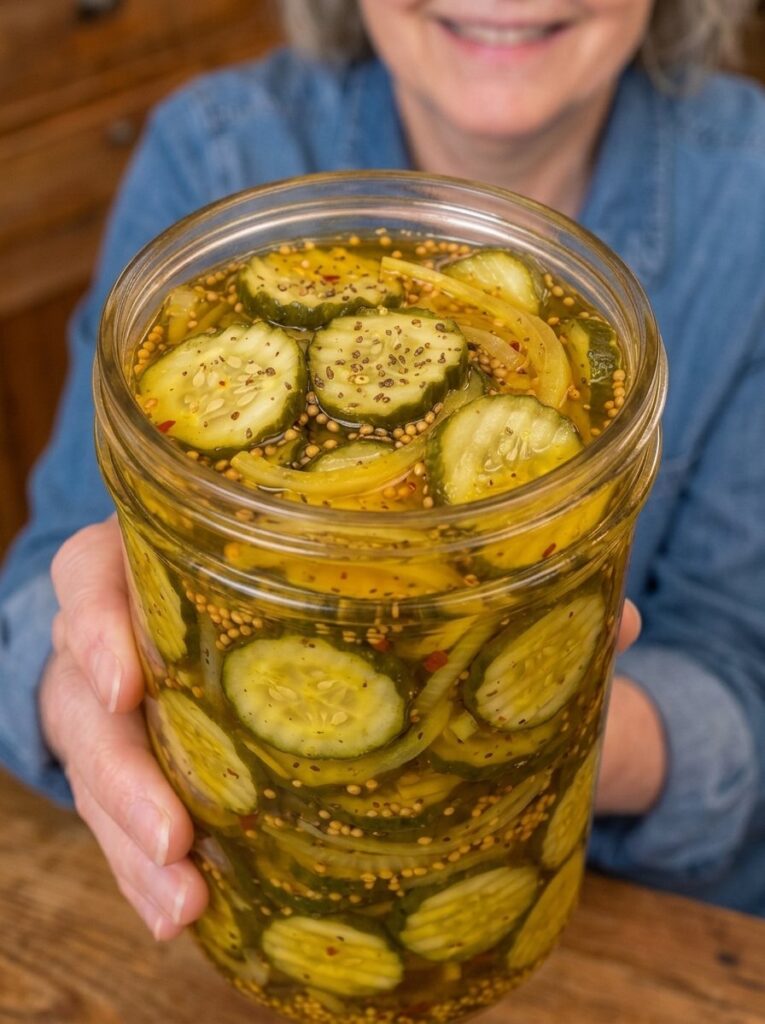
Few pickles are as beloved as the classic bread-and-butter pickle. Thin, crisp cucumber slices and tender onion rings are bathed in a golden brine that is sweet, tangy, and gently spiced, creating a flavor that sits somewhere between a dill pickle and a sweet relish. They are bright, crunchy, and incredibly versatile, and one jar can transform a plain sandwich, a juicy burger, or a simple plate of cheese and crackers into something memorable.
This homemade version could hardly be simpler. There is no canning pot, no sterilizing equipment, and no long wait. You slice the cucumbers and onion, bring a simple brine of vinegar, sugar, water, salt, and spices to a gentle boil, pour it over the vegetables in a jar, and let the refrigerator do the rest. After at least 24 hours, you have a jar of sweet, tangy, crunchy pickles that will keep for two to three weeks.
The name itself has a charming origin. Bread-and-butter pickles are said to have earned their name because they were so affordable and so closely tied to everyday meals that families would simply eat them with bread and butter. Whatever the true story, the name captures the spirit of these pickles: humble, comforting, and always welcome on the table.
In this complete guide, you will learn which cucumbers to choose, why each ingredient matters, how to keep the pickles crisp, how to adjust the sweetness and spice, and how to store them safely. You will also find serving ideas, variations, a recipe card, and answers to common questions.
What Are Bread-and-Butter Pickles?
Bread-and-butter pickles are sweet-and-sour pickles made from sliced cucumbers and onions in a brine of vinegar, sugar, and spices. They differ from dill pickles in that they are noticeably sweeter, with a gentle tang rather than a sharp, salty bite. The signature golden color comes from turmeric, while mustard seeds and celery seeds provide the classic aromatic, slightly earthy flavor that makes these pickles instantly recognizable.
Traditional versions are often canned in a boiling water bath so they can be stored at room temperature. This recipe takes a simpler path. It is a refrigerator pickle, which means the jar is kept cold from the moment it cools. The hot brine is poured over raw vegetables, which lightly softens them while preserving much of their crunch, and the flavors blend and deepen in the refrigerator over the next day or two.
Because this is a refrigerator recipe and not a canning recipe, it is not shelf-stable. The jar must stay refrigerated at all times and be enjoyed within two to three weeks. In return, you get a fast, forgiving recipe with fresh, crisp results.
Why You Will Love This Recipe
Sweet, tangy, and perfectly balanced. The sugar softens the vinegar, creating a brine that is neither too sharp nor too sugary.
Simple ingredients. Cucumbers, onion, vinegar, sugar, water, salt, and a few pantry spices are all you need.
No canning required. There is no special equipment or preserving knowledge needed. Just a saucepan and a jar.
Ready in a day. The pickles are good after 24 hours, and the flavor continues to develop over the following days.
Crisp and crunchy. Pouring hot brine over raw, thinly sliced vegetables keeps them pleasantly crisp.
Beautiful golden color. The turmeric gives the brine a bright, appetizing tint.
Incredibly versatile. Use them on sandwiches, burgers, hot dogs, salads, charcuterie boards, and more.
Customizable. Add more spice, less sugar, extra garlic, or different herbs to make the recipe your own.
Budget-friendly. Homemade pickles cost a fraction of the price of specialty jars.
Ingredients Breakdown
- 4 cups thinly sliced cucumbers
- 1 medium onion, thinly sliced
- 1 cup white vinegar
- 3/4 cup granulated sugar
- 1/2 cup water
- 1 tablespoon salt
- 1 teaspoon mustard seeds
- 1/2 teaspoon celery seeds
- 1/4 teaspoon turmeric
- 1/4 teaspoon red pepper flakes (optional)
Cucumbers. Pickling cucumbers, often sold as Kirby cucumbers, are the best choice. They are short, firm, and bumpy, with thin skin and fewer seeds, so they stay crisp in brine. If you cannot find them, small, firm garden cucumbers or Persian cucumbers also work well. Large, waxy slicing cucumbers have thick skin and many seeds, and they tend to turn soft, so avoid them if possible. Choose cucumbers that are fresh, firm, and free of soft spots. About four cups of slices is roughly two medium pickling cucumbers’ worth, depending on size.
Onion. A medium onion adds sweetness and a mild bite. Yellow or white onions are traditional, though sweet onions and red onions also work. Slice the onion thinly so it softens evenly in the brine.
White vinegar. White vinegar gives a clean, sharp tang. For the best flavor and a reliable level of acidity, use a vinegar labeled 5 percent acidity.
Granulated sugar. Three-quarters of a cup creates the signature sweetness. The sugar balances the acidity and gives the brine a slightly syrupy body. You can reduce it slightly if you prefer a tangier pickle.
Water. Water dilutes the vinegar so the pickles are tangy rather than harsh.
Salt. Salt seasons the cucumbers and helps draw out moisture. Pickling salt or kosher salt dissolves cleanly. Avoid iodized table salt, which can cloud the brine and darken the vegetables. If you use a different type of salt, measure carefully, since fine salt is more concentrated than coarse salt by volume.
Mustard seeds. These give the pickles a classic, slightly pungent, earthy flavor.
Celery seeds. Celery seeds add a distinctive savory, herbal note that defines the bread-and-butter flavor profile.
Turmeric. A small amount provides the golden color and a subtle, warm earthiness. Be aware that turmeric can stain fingers, cutting boards, and plastic containers.
Red pepper flakes. Optional, but a pinch adds gentle warmth that offsets the sweetness.
Step-by-Step Instructions
Step 1: Slice the Cucumbers and Onion
Wash the cucumbers well and trim off both ends, which can contain enzymes that soften pickles. Slice the cucumbers into thin rounds, about one-eighth to one-quarter of an inch thick. Peel the onion and slice it into thin rounds or half-moons. Even slices help the vegetables pickle evenly. A mandoline makes quick work of this step, but a sharp knife works well too. Use the guard on a mandoline to protect your fingers.
Step 2: Make the Brine
In a saucepan, combine the vinegar, sugar, water, salt, mustard seeds, celery seeds, turmeric, and the optional red pepper flakes.
Step 3: Bring to a Gentle Boil
Place the saucepan over medium heat and bring the mixture to a gentle boil, stirring until the sugar dissolves completely. This usually takes a few minutes. The brine should look clear and golden. Remove the pan from the heat as soon as it boils.
Step 4: Fill the Jar
Place the sliced cucumbers and onions in a clean, heat-safe jar, such as a quart-size mason jar. Pack them in snugly, alternating layers of cucumber and onion, but do not crush the slices.
Step 5: Pour the Hot Brine
Carefully pour the hot brine over the vegetables until they are completely covered. A funnel helps prevent spills. Tap the jar gently on the counter to release any trapped air bubbles, and make sure all the slices are submerged. If needed, press them down gently with a clean spoon.
Step 6: Cool, Seal, and Refrigerate
Let the jar cool at room temperature until it is no longer steaming, then seal it with the lid and place it in the refrigerator. Allow the pickles to chill for at least 24 hours before serving. The flavors will continue to develop over the first few days.
Tips for the Crispest Bread-and-Butter Pickles
Start with very fresh cucumbers. Cucumbers lose crispness quickly after harvest. Use them within a day or two of buying, and choose firm ones.
Trim the blossom ends. Cutting off both ends of each cucumber removes parts that can contribute to softness.
Chill the cucumbers first. Soaking the cucumber slices in ice water for 30 to 60 minutes before jarring them can boost crispness. Drain them well before adding them to the jar. This is an optional step that is not part of the base recipe.
Slice evenly. Slices that are too thin turn soft quickly, while slices that are too thick take longer to absorb flavor. Aim for one-eighth to one-quarter of an inch.
Pour the brine hot, but do not cook the vegetables. The hot brine is enough. Simmering the cucumbers in the pot will make them mushy.
Use the right vinegar. Choose vinegar with 5 percent acidity, and do not reduce the amount of vinegar in the recipe.
Keep everything submerged. Pieces sticking out of the brine can soften or discolor faster.
Use a clean jar and clean utensils. Wash the jar in hot soapy water, rinse well, and use a clean fork each time you take out pickles.
Avoid iodized salt. It can make the brine cloudy and affect the color.
Be patient. The pickles are tasty after 24 hours, but their flavor is rounder and more balanced after two or three days.
Variations and Substitutions
Less sweet pickles. Reduce the sugar to 1/2 cup for a tangier pickle. Taste the brine before pouring it. It should be pleasantly sweet and sour.
Extra spicy. Increase the red pepper flakes, or add a few slices of fresh jalapeno to the jar.
Garlic bread-and-butter pickles. Add two or three peeled, lightly crushed garlic cloves to the jar.
Apple cider vinegar version. Replace some or all of the white vinegar with apple cider vinegar for a fruitier, mellower flavor. Make sure it has 5 percent acidity.
Brown sugar pickles. Replace half of the white sugar with brown sugar for a deeper, caramel-like sweetness.
Add other vegetables. Thin slices of bell pepper, carrot, or zucchini can be pickled in the same brine.
Dill twist. Add a sprig of fresh dill to the jar for an herbal note.
Extra spices. Add a few black peppercorns, a pinch of ground ginger, or a clove for more complexity.
Red onion pickles. Use red onion for a pink-tinged, slightly milder pickle.
Sandwich-ready chips. Cut the cucumbers into thicker rounds, about a quarter inch, for hearty pickle chips that stay crunchy on burgers.
Serving Suggestions
Bread-and-butter pickles are a sweet-and-sour companion to many foods.
- Burgers and sandwiches. Layer them on cheeseburgers, grilled chicken sandwiches, pulled pork, deli sandwiches, and tuna melts.
- Hot dogs and sausages. Use them as a tangy topping or side.
- Cheese and charcuterie boards. Their sweetness and acidity pair beautifully with sharp cheeses and cured meats.
- Salads. Chop them into potato salad, egg salad, tuna salad, or chicken salad.
- Grilled meats and BBQ. Serve them alongside grilled chicken, ribs, brisket, and pulled pork.
- Fried foods. They cut through the richness of fried chicken, fish and chips, and crispy sandwiches.
- Tacos and wraps. Add a sweet-and-sour crunch to tacos, wraps, and rice bowls.
- Snack plate. Enjoy them chilled, straight from the jar, or alongside crackers and cheese.
- Homemade tartar sauce or burger sauce. Chop and stir them into mayonnaise-based sauces.
Serve the pickles cold for the best crunch.
Storage Tips
This is a refrigerator-pickle recipe. It is not intended for canning or shelf storage. Keep the jar refrigerated at all times.
Refrigerator temperature. Store the pickles at 40 degrees Fahrenheit (4 degrees Celsius) or below.
Storage time. Enjoy the pickles within 2 to 3 weeks. They are safest and best when kept cold, covered, and fully submerged in brine.
Keep them submerged. Make sure the vegetables stay covered by the brine.
Use clean utensils. Always use a clean fork or tongs to take out pickles, and never eat directly from the jar with a used utensil.
Texture changes. The cucumbers will gradually soften over time, which is normal. For the best crunch, eat the pickles within the first week or two.
Signs of spoilage. Discard the pickles if you notice an off smell, mold, sliminess, fizzing, or any unusual change in appearance or texture. When in doubt, throw it out.
Do not freeze. Freezing destroys the crisp texture of the cucumbers and leaves them limp.
Do not reuse the brine. Once the pickles are finished, do not use the same brine for a new batch.
Recipe Card
Sweet Bread-and-Butter Pickles
Prep time: 15 minutes Cook time: 5 minutes Chilling time: at least 24 hours Yield: about 1 quart jar Course: Condiment, side Cuisine: American
Ingredients
- 4 cups thinly sliced cucumbers
- 1 medium onion, thinly sliced
- 1 cup white vinegar
- 3/4 cup granulated sugar
- 1/2 cup water
- 1 tablespoon salt
- 1 teaspoon mustard seeds
- 1/2 teaspoon celery seeds
- 1/4 teaspoon turmeric
- 1/4 teaspoon red pepper flakes (optional)
Instructions
- Slice the cucumbers and onion into thin rounds.
- In a saucepan, combine the vinegar, sugar, water, salt, mustard seeds, celery seeds, turmeric, and red pepper flakes.
- Bring to a gentle boil, stirring until the sugar dissolves.
- Place the cucumbers and onions in a clean, heat-safe jar.
- Pour the hot brine over the vegetables until completely covered.
- Let cool, seal, and refrigerate for at least 24 hours before serving.
Storage: Keep refrigerated and enjoy within 2 to 3 weeks.
Frequently Asked Questions
Why are they called bread-and-butter pickles?
The exact origin is debated, but the name is commonly linked to the idea that these inexpensive, sweet-and-tangy pickles were a staple that families ate with bread and butter. Whatever the history, the name has stuck for a classic sweet pickle made with cucumbers, onions, vinegar, sugar, and spices.
How long should I wait before eating them?
Wait at least 24 hours. The pickles will taste even better after two or three days, once the flavors have blended.
How long do refrigerator bread-and-butter pickles last?
Enjoy them within 2 to 3 weeks, as long as they stay refrigerated, covered in brine, and handled with clean utensils. For the best crunch, eat them sooner.
Can I can these pickles for shelf storage?
This recipe is designed as a refrigerator pickle, not a canning recipe. If you want shelf-stable pickles, follow a tested canning recipe from a trusted source and use proper canning procedures.
Why did my pickles turn soft?
Common reasons include using old or waxy cucumbers, slicing them too thin, cooking them in the brine, or storing the jar too long. Use fresh pickling cucumbers, pour the hot brine over raw slices, and eat the pickles within the recommended time.
Why is my brine cloudy?
Cloudiness can come from iodized salt, hard water, or spices. If the brine also smells off or looks slimy or fizzy, discard the batch. Using pickling or kosher salt and filtered water can help keep it clear.
Can I use less sugar?
Yes. You can reduce the sugar to make the pickles tangier, but do not reduce the vinegar. Sugar affects flavor more than preservation in a refrigerator pickle, so adjust to taste.
Can I use a different vinegar?
Yes. Apple cider vinegar works well, as long as it has 5 percent acidity. It gives a fruitier flavor, while white vinegar keeps the taste cleaner and the color brighter.
Can I use English or regular slicing cucumbers?
You can, but the results will be softer. Seedless or English cucumbers may work in a pinch. For the crispest pickles, choose Kirby or Persian cucumbers.
Final Thoughts
Sweet Bread-and-Butter Pickles are a timeless recipe that deserves a place in your refrigerator. They are easy to make, wonderfully balanced, and endlessly useful. The sweet-and-tangy brine, the golden hue from turmeric, and the aromatic mustard and celery seeds give these pickles a flavor that is unmistakably comforting.
Keep the essentials in mind: choose fresh pickling cucumbers, slice them evenly, pour the hot brine over the raw vegetables, keep everything submerged, refrigerate promptly, and enjoy within two to three weeks. Adjust the sweetness, spice, and add-ins to suit your taste, and you will have a jar of crisp, tangy, sweet pickles ready for every sandwich, burger, and snack plate.
Do you like your pickles sweeter, spicier, or tangier? Share your favorite twist in the comments and save this recipe for your next batch.
Print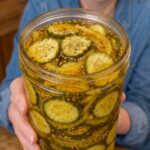
Sweet Bread-and-Butter Pickles: Easy Homemade Refrigerator Pickle Recipe
Description
Prep time: 15 minutes Cook time: 5 minutes Chilling time: at least 24 hours Yield: about 1 quart jar Course: Condiment, side Cuisine: American
Ingredients
- 4 cups thinly sliced cucumbers
- 1 medium onion, thinly sliced
- 1 cup white vinegar
- 3/4 cup granulated sugar
- 1/2 cup water
- 1 tablespoon salt
- 1 teaspoon mustard seeds
- 1/2 teaspoon celery seeds
- 1/4 teaspoon turmeric
- 1/4 teaspoon red pepper flakes (optional)
Instructions
- Slice the cucumbers and onion into thin rounds.
- In a saucepan, combine the vinegar, sugar, water, salt, mustard seeds, celery seeds, turmeric, and red pepper flakes.
- Bring to a gentle boil, stirring until the sugar dissolves.
- Place the cucumbers and onions in a clean, heat-safe jar.
- Pour the hot brine over the vegetables until completely covered.
- Let cool, seal, and refrigerate for at least 24 hours before serving.