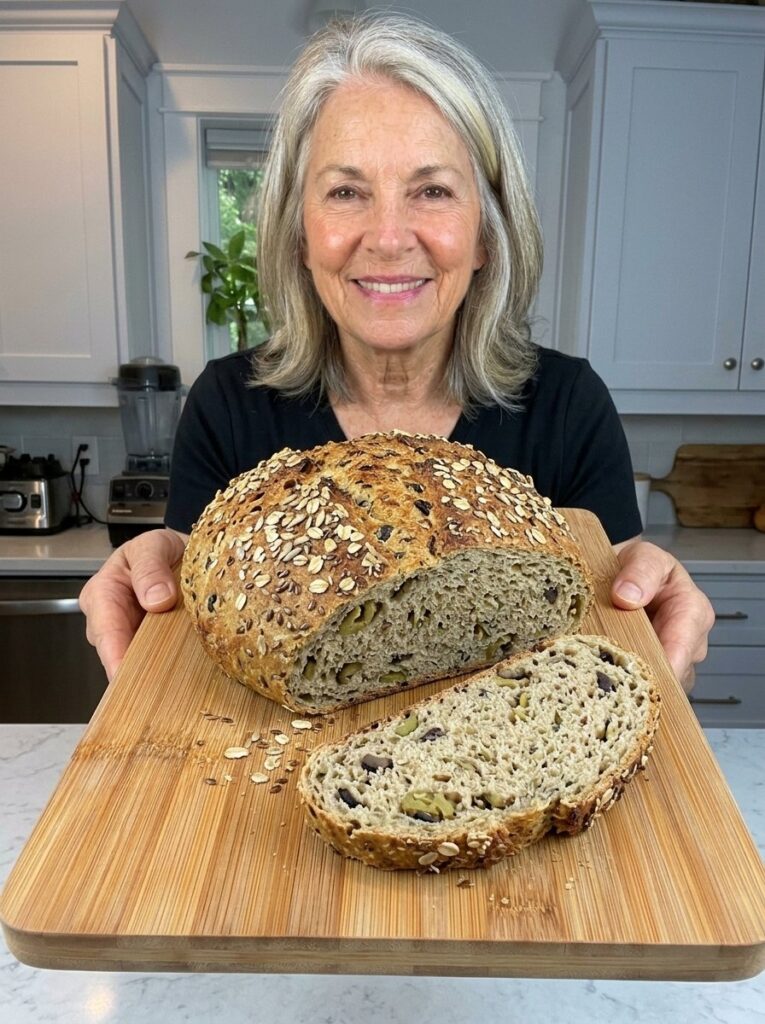
There are few things more satisfying than pulling a golden, fragrant loaf of homemade bread out of the oven, and this Mediterranean multigrain olive bread delivers that feeling in every way. It combines nutty whole-wheat flour, soft bread flour and rolled oats with chopped green and black olives, crunchy sunflower seeds, flaxseeds and the classic Mediterranean herbs oregano and rosemary. The result is a rustic, hearty loaf with a crisp, deeply golden crust and a tender, flavorful crumb studded with juicy olives.
This is a yeast bread made with instant yeast, so there is no sourdough starter to maintain and no complicated technique to master. If you can mix, knead and wait, you can bake it. The flavor is savory, earthy and a little briny, which makes it wonderful with olive oil for dipping, alongside soups and salads, or piled high with sandwich fillings.
In this complete guide you will learn what Mediterranean multigrain olive bread is, why it works, how each ingredient contributes, how to make it step by step and how to avoid the most common mistakes. You will also find variations, serving ideas, storage tips, a recipe card and answers to the questions bakers ask most often.
What Is Mediterranean Multigrain Olive Bread? 🍞
Mediterranean multigrain olive bread is a rustic loaf inspired by the flavors of the Mediterranean table: olives, olive oil, herbs and wholesome grains. It is built on a base of whole-wheat and bread flours, enriched with rolled oats, and then loaded with olives, sunflower seeds and flaxseeds for flavor, texture and nutrition.
Whole-wheat flour gives the bread its nutty, earthy depth and a hearty crumb, while bread flour adds the extra gluten strength that keeps the loaf from becoming too dense. Rolled oats add softness and moisture. Olive oil enriches the dough and gives the crumb a tender, slightly silky quality. Oregano and rosemary perfume the dough with a warm, herbal aroma that tastes like the Mediterranean.
The finished loaf is substantial but not heavy. It has a chewy, crisp crust and a moist, flavorful interior. Every slice offers pockets of salty olive and a little crunch from the seeds.
Why You’ll Love This Multigrain Olive Bread 💪
It is packed with flavor. Olives, oregano, rosemary and olive oil give the bread a savory, aromatic character that plain loaves cannot match.
It is wholesome and hearty. Whole-wheat flour, oats, sunflower seeds and flaxseeds add fiber, nutrients and texture.
It has a beautiful crust and crumb. The loaf bakes up deeply golden with a crisp exterior and a soft, moist interior.
It needs no sourdough starter. Instant yeast makes it approachable and reliable, even for beginners.
It uses simple, accessible ingredients. Everything is available in a regular supermarket.
It is plant-based by nature. The recipe contains no eggs, dairy or butter, so it suits vegan diets, provided your ingredients are free of animal products.
It is versatile. Serve it for breakfast, with soup, with cheese, as sandwich bread or on its own with olive oil.
It makes your kitchen smell incredible. The scent of baking bread, herbs and olives is half the reward.
Ingredient Breakdown 🥣
Whole-Wheat Flour (2 cups / 250 g)
Whole-wheat flour is the backbone of this multigrain loaf. It contributes a nutty, slightly sweet flavor, fiber and a rustic, hearty texture. It also absorbs more water than white flour and absorbs it more slowly, which is why the dough may feel a little sticky at first and firm up as it rests and kneads.
Bread Flour (1 cup / 125 g)
Bread flour has a higher protein content than all-purpose flour, which produces more gluten. That extra gluten gives the loaf structure and chew, and helps it rise well despite the heavy whole-wheat flour, oats and seeds. If you only have all-purpose flour, it will work, though the loaf may be slightly less chewy and a little denser.
Rolled Oats (1/2 cup / 45 g)
Rolled oats add softness, moisture and a gentle, wholesome flavor. They absorb liquid and keep the crumb tender. Use plain old-fashioned rolled oats, not instant or flavored packets.
Pitted Green and Black Olives (3/4 cup / 110 g, chopped)
Olives are what make this bread special. A mix of green and black olives gives a more interesting balance, with green olives adding a firm, briny bite and black olives adding a milder, fruitier flavor. Make sure the olives are pitted, and double-check by running a finger through the chopped pieces, since a single missed pit can damage a tooth.
Drain the olives well and pat them dry with paper towels before chopping. Excess brine or oil will make the dough sticky and weigh down the crumb. Remember that olives are salty, which is why the recipe uses a moderate amount of added salt.
Sunflower Seeds (2 tablespoons) and Flaxseeds (1 tablespoon)
Sunflower seeds add a mild, nutty crunch, while flaxseeds contribute a subtle earthy flavor and healthy fats. The seeds also give the crumb a rustic, multigrain look. Use raw or lightly toasted sunflower seeds. Whole flaxseeds work well in this recipe.
Olive Oil (2 tablespoons)
Olive oil enriches the dough, softens the crumb and adds a gentle fruity flavor. Extra virgin olive oil gives the best taste, but any good-quality olive oil works.
Instant Yeast (2 teaspoons)
Instant yeast, also called rapid-rise or bread machine yeast, can be mixed directly into the dry ingredients without proofing first. Check the expiration date, since old yeast is the most common reason bread fails to rise. If you only have active dry yeast, dissolve it in the warm water for about 5 to 10 minutes until foamy before adding it to the flour.
Salt (1 teaspoon)
Salt strengthens the gluten, controls the yeast and brings out the flavor of the grains. Do not skip it, though remember that olives add their own salt.
Dried Oregano (1 teaspoon) and Dried Rosemary (1 teaspoon)
These two herbs give the bread its unmistakable Mediterranean aroma. If your dried rosemary is in large, needle-like pieces, crush it between your fingers or chop it finely so it does not leave sharp, woody bits in the crumb.
Warm Water (1 1/4 cups / 300 ml, approximately)
Warm water activates the yeast and hydrates the flour and oats. It should feel comfortably warm to the touch, not hot, ideally around 105 to 115°F (40 to 46°C). Water that is too hot can kill the yeast. The exact amount you need depends on your flour, so hold back a little and add more only if the dough feels dry.
Equipment You Will Need 🥄
- A large mixing bowl
- A wooden spoon or dough scraper
- A clean work surface for kneading, or a stand mixer with a dough hook
- A cutting board and knife for chopping the olives
- A baking sheet or a loaf pan (about 9 x 5 inches)
- Parchment paper (optional)
- A sharp knife or bread lame for scoring
- A wire rack for cooling
- A kitchen thermometer (optional, but helpful for checking doneness)
How to Make Mediterranean Multigrain Olive Bread (Step by Step) 👩🍳
Step 1: Mix the Dry Ingredients
In a large bowl, combine the whole-wheat flour, bread flour, rolled oats, instant yeast, salt, oregano and rosemary. Whisk or stir so the yeast and salt are evenly distributed.
Step 2: Add the Wet Ingredients
Pour in the warm water and olive oil. Mix with a wooden spoon or your hands until a soft, shaggy dough forms and no dry flour remains.
Step 3: Knead
Turn the dough onto a lightly floured surface and knead for 8 to 10 minutes, until it becomes smooth and elastic. If the dough is too sticky to handle, add a tablespoon of flour at a time. If it feels stiff and dry, add a teaspoon of water at a time. Whole-wheat dough should feel soft and slightly tacky, not stiff. If you use a stand mixer, knead on low to medium speed with the dough hook for about 6 to 8 minutes.
Step 4: Add the Olives and Seeds
Flatten the dough slightly, scatter the chopped olives, sunflower seeds and flaxseeds over the surface, then fold the dough over and gently knead for a minute or two until they are evenly distributed. Adding the olives and seeds after the main kneading protects the gluten structure and keeps the olives from tearing and smearing through the dough.
Step 5: First Rise
Place the dough in a lightly oiled bowl, turn it once to coat, cover it with a damp towel or plastic wrap and let it rise in a warm place for 60 to 90 minutes, or until approximately doubled in size. Rising times depend on the temperature of your kitchen. Whole-grain doughs may take a little longer.
Step 6: Shape
Gently press the air out of the dough and shape it into a round loaf by tucking the edges underneath and creating surface tension, or place it in a lightly greased loaf pan. If you are baking a free-form round, place it on a baking sheet lined with parchment paper.
Step 7: Second Rise
Cover the shaped dough and let it rest for 30 to 45 minutes, until it looks puffy. Preheat your oven during the last 15 to 20 minutes of this rise so it is fully hot when the loaf is ready.
Step 8: Score and Bake
Preheat the oven to 375°F (190°C). Score the top of the loaf with a sharp knife or bread lame, making one to three shallow slashes about 1/4 inch deep. Bake for 35 to 45 minutes, until the loaf is deeply golden and cooked through. A properly baked loaf sounds hollow when tapped on the bottom. For a more precise check, the internal temperature should reach about 200 to 210°F (93 to 99°C).
Step 9: Cool Completely
Transfer the bread to a wire rack and allow it to cool completely before slicing. The crumb is still setting as the loaf cools, and slicing too early can make the interior seem gummy. It is worth the wait.
Expert Tips for the Best Olive Bread 💡
Dry the olives thoroughly. Pat them dry with paper towels after draining. Wet olives make the dough slippery and sticky.
Check for pits. Even olives labeled pitted can contain the occasional pit or fragment. Check carefully as you chop.
Do not add too much flour. Whole-wheat dough is naturally a little sticky at first. Adding too much flour during kneading leads to a dense, dry loaf.
Let the dough rest if it feels sticky. Whole-wheat flour absorbs water slowly. Cover the dough for 10 to 15 minutes, then knead again before deciding whether to add more flour.
Knead until elastic. A properly kneaded dough springs back slowly when poked and passes the windowpane test, stretching thin without tearing.
Add the mix-ins last. Folding in the olives and seeds near the end of kneading preserves the dough structure.
Mind your yeast. Use fresh yeast and warm, not hot, water. Dead yeast means no rise.
Be patient with the rise. Whole-grain and mix-in-heavy doughs rise more slowly than plain white dough. Let the dough double rather than relying only on the clock.
Create steam for a better crust. Place a shallow pan of hot water on the lower oven rack while the oven preheats, or spritz the loaf with water before baking, for a crisper, crackly crust.
Check doneness properly. A hollow sound and an internal temperature of about 200 to 210°F (93 to 99°C) signal a fully baked loaf.
Cool before slicing. Cutting into hot bread releases steam and can leave the crumb gummy.
Delicious Variations 🌿
Sun-dried tomato and olive. Replace some of the olives with chopped sun-dried tomatoes for a sweet, tangy twist.
Feta and olive loaf. Fold in a handful of crumbled feta cheese with the olives for creamy, salty pockets.
Garlic and herb version. Add a teaspoon of garlic powder or a couple of finely minced roasted garlic cloves to the dough.
Thyme and lemon. Replace the rosemary with dried thyme and add a little lemon zest for a bright, fragrant loaf.
Extra seedy. Add pumpkin seeds, sesame seeds or poppy seeds to the dough or sprinkle them over the top before baking.
Rolls. Divide the dough into 10 to 12 pieces, shape into rolls and bake for about 20 to 25 minutes for portable sandwich rolls.
Loaf pan version. Bake in a greased 9 x 5 inch loaf pan for an even-sided sandwich loaf that is easy to slice.
Olive oil brushed crust. Brush the top of the loaf with olive oil before baking and sprinkle with flaky salt and dried herbs.
Keep in mind that extra mix-ins change the moisture balance, so add them in small amounts.
What to Serve With Mediterranean Multigrain Olive Bread 🥗
This bread is delicious on its own, but it also shines alongside many dishes:
- Olive oil and balsamic vinegar: Tear off pieces and dip them for a classic Mediterranean starter.
- Hummus and vegetables: Spread hummus on a slice and top with cucumber, tomato and a drizzle of olive oil.
- Soups and stews: Serve alongside tomato soup, lentil soup, minestrone or vegetable stew.
- Cheese and charcuterie boards: Pair it with feta, goat cheese, mozzarella, cured meats and fresh fruit.
- Sandwiches: Layer with roasted vegetables, mozzarella and basil, or with turkey, chicken or tuna.
- Bruschetta: Toast slices, rub with garlic and top with chopped tomatoes and basil.
- Eggs: Serve with fried, poached or scrambled eggs for a hearty breakfast.
- Salads: Pair a slice with a fresh green or Greek salad for a satisfying lunch.
Storage and Make-Ahead Tips 🥶
At room temperature: Store the completely cooled loaf in a bread bag, paper bag or clean kitchen towel for 2 to 3 days. Keeping it cut-side down on a cutting board helps protect the crumb. Avoid sealing a warm loaf in plastic, since trapped moisture softens the crust.
In the refrigerator: Refrigeration can dry out bread quickly, so it is generally best avoided unless your kitchen is very warm or humid.
In the freezer: Slice the cooled loaf and freeze the slices in a freezer-safe bag for up to 3 months. Toast slices straight from frozen, or thaw at room temperature.
Refreshing the crust: To revive a slightly stale loaf, warm it in a 350°F (175°C) oven for 5 to 10 minutes until the crust crisps up again.
Make-ahead tip: You can mix and knead the dough, then let it do its first rise slowly in the refrigerator overnight. Bring it back to room temperature, shape it and finish the second rise before baking.
Recipe Card: Mediterranean Multigrain Olive Bread 📋
Prep time: 25 minutes Rising time: 90 to 135 minutes in total Bake time: 35 to 45 minutes Servings: About 10 to 12 slices Course: Bread, side Cuisine: Mediterranean-inspired
Ingredients
- 2 cups (250 g) whole-wheat flour
- 1 cup (125 g) bread flour
- 1/2 cup (45 g) rolled oats
- 3/4 cup (110 g) pitted green and black olives, chopped
- 2 tablespoons sunflower seeds
- 1 tablespoon flaxseeds
- 2 tablespoons olive oil
- 2 teaspoons instant yeast
- 1 teaspoon salt
- 1 teaspoon dried oregano
- 1 teaspoon dried rosemary
- 1 1/4 cups (300 ml) warm water, approximately
Instructions
- In a large bowl, combine the whole-wheat flour, bread flour, rolled oats, yeast, salt, oregano and rosemary.
- Pour in the warm water and olive oil. Mix until a soft dough forms.
- Knead for 8 to 10 minutes until smooth and elastic. Add a little flour or water if necessary.
- Gently knead in the chopped olives, sunflower seeds and flaxseeds until evenly distributed.
- Cover and let the dough rise in a warm place for 60 to 90 minutes, or until approximately doubled in size.
- Form the dough into a round loaf or place it in a lightly greased loaf pan.
- Cover and let rest for 30 to 45 minutes.
- Preheat the oven to 375°F (190°C). Score the top with a sharp knife and bake for 35 to 45 minutes, until deeply golden and cooked through.
- Transfer to a wire rack and allow to cool completely before slicing.
Frequently Asked Questions ❓
Do I need a sourdough starter for this bread?
No. This recipe uses instant yeast, so there is no starter to feed or maintain. It is a straightforward yeast bread suitable for beginners.
Can I use all-purpose flour instead of bread flour?
Yes. All-purpose flour will work, though the loaf may be slightly less chewy and a little denser because all-purpose flour has less protein. You may also need slightly less water.
Can I use 100 percent whole-wheat flour?
You can, but the loaf will be denser and heavier, and it will need a bit more water because whole-wheat flour is thirsty. The bread flour in the recipe helps keep the crumb lighter and the structure stronger.
What kind of olives work best?
A mix of pitted green and black olives gives the best balance of flavor. Kalamata olives are a delicious option, too. Choose olives that are firm rather than mushy, and drain and dry them well before chopping.
Can I use active dry yeast instead of instant yeast?
Yes. Dissolve the same amount of active dry yeast in the warm water for 5 to 10 minutes until foamy, then add it to the flour. Rising times may be slightly longer.
Why is my dough so sticky?
Whole-wheat dough is naturally stickier at first because the bran and germ absorb water slowly. Let the dough rest for 10 to 15 minutes, then knead again before adding more flour. Wet olives can also make the dough sticky, so be sure to dry them thoroughly.
Why did my bread not rise well?
The most common causes are old or dead yeast, water that was too hot or too cold, a kitchen that is too cool or too little rising time. Use fresh yeast, check the water temperature and let the dough double in size before shaping and baking.
Why is my bread dense?
Density can come from adding too much flour, underkneading, too little rising time or too many heavy mix-ins. Knead until the dough is smooth and elastic, add flour sparingly and let the dough rise fully.
How do I know when the bread is done?
The loaf should be deeply golden and sound hollow when you tap the bottom. The internal temperature should reach about 200 to 210°F (93 to 99°C).
Is this bread vegan?
The recipe contains no eggs, dairy or honey, so it is vegan as written, provided your ingredients are free of animal-derived additives.
Is this bread gluten-free?
No. It is made with wheat flour and contains gluten.
Can I make it in a bread machine?
You can adapt it for the dough cycle. Add the wet ingredients first, then the dry ingredients, and add the olives and seeds at the machine’s mix-in signal. Shape and bake the loaf in the oven for the best crust.
Final Thoughts 🫒🍞
This Mediterranean multigrain olive bread proves that bakery-quality bread is well within reach of the home kitchen. With whole-wheat and bread flours, rolled oats, olives, seeds and a pair of fragrant herbs, you can bake a rustic, golden loaf with a crisp crust and a flavorful, hearty crumb. It is easy to customize, rewarding to make and wonderful to share.
Bake a loaf for your next dinner, serve it warm with a bowl of good olive oil and enjoy the flavors of the Mediterranean at your own table.
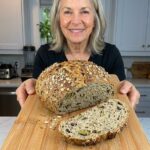
Mediterranean Multigrain Olive Bread: Rustic, Hearty and Full of Flavor 🫒🌿
Description
Prep time: 25 minutes Rising time: 90 to 135 minutes in total Bake time: 35 to 45 minutes Servings: About 10 to 12 slices Course: Bread, side Cuisine: Mediterranean-inspired
Ingredients
- 2 cups (250 g) whole-wheat flour
- 1 cup (125 g) bread flour
- 1/2 cup (45 g) rolled oats
- 3/4 cup (110 g) pitted green and black olives, chopped
- 2 tablespoons sunflower seeds
- 1 tablespoon flaxseeds
- 2 tablespoons olive oil
- 2 teaspoons instant yeast
- 1 teaspoon salt
- 1 teaspoon dried oregano
- 1 teaspoon dried rosemary
- 1 1/4 cups (300 ml) warm water, approximately
Instructions
- In a large bowl, combine the whole-wheat flour, bread flour, rolled oats, yeast, salt, oregano and rosemary.
- Pour in the warm water and olive oil. Mix until a soft dough forms.
- Knead for 8 to 10 minutes until smooth and elastic. Add a little flour or water if necessary.
- Gently knead in the chopped olives, sunflower seeds and flaxseeds until evenly distributed.
- Cover and let the dough rise in a warm place for 60 to 90 minutes, or until approximately doubled in size.
- Form the dough into a round loaf or place it in a lightly greased loaf pan.
- Cover and let rest for 30 to 45 minutes.
- Preheat the oven to 375°F (190°C). Score the top with a sharp knife and bake for 35 to 45 minutes, until deeply golden and cooked through.
- Transfer to a wire rack and allow to cool completely before slicing.