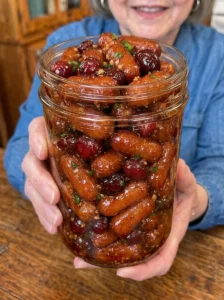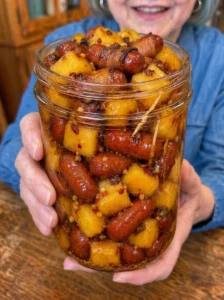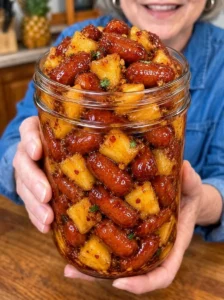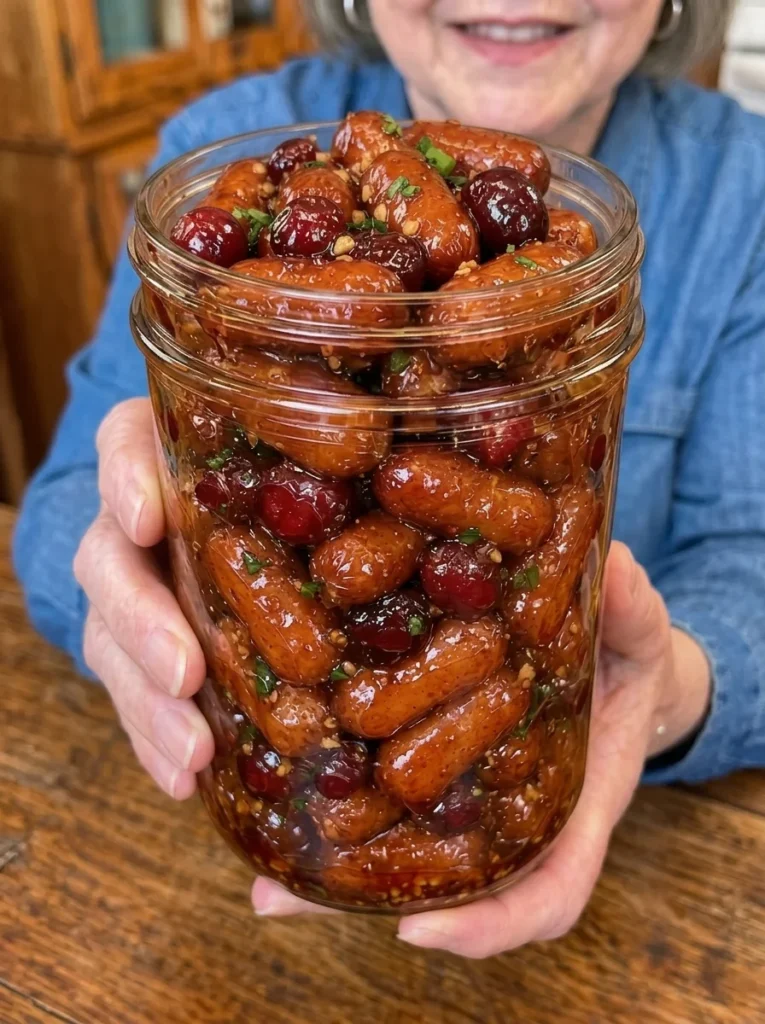
Sweet cranberry sauce, smoky barbecue sauce, and Dr Pepper turn a package of cocktail sausages into a glossy, festive appetizer. The cranberries provide tartness, the soda adds a caramel-like sweetness, and Dijon mustard and Worcestershire sauce give the glaze a savory edge.
These Sugarfire Dr Pepper Cranberry Glazed Cocktail Sausages are easy to serve at holiday gatherings, game days, and potlucks. Make them in a wide skillet for better control over the glaze, or use a slow cooker when a longer cooking window suits your schedule.
Whole-berry cranberry sauce gives the coating little pieces of fruit and a deep red color. A sprinkle of green onions or parsley makes a simple finishing touch, but the sausages are just as enjoyable served straight from a warm dish with toothpicks.
Recipe note: This supplied recipe has not been independently tested. “Sugarfire” is used as the supplied recipe name; this is not presented as an official restaurant recipe or verified copycat. Cooking time and sauce thickness depend on your ingredients and equipment. Use fully cooked cocktail sausages and follow their package heating directions.
Why You’ll Love This Recipe
- Cranberry sauce balances the sweet barbecue glaze with tart fruit flavor.
- The ingredients require very little preparation.
- Both stovetop and slow-cooker methods are available.
- The sauce can be mixed ahead.
- Individual sausages are convenient to serve as a party appetizer.
Recipe at a Glance
- Prep time: About 10 minutes
- Stovetop cooking time: Approximately 25–35 minutes, plus initial heating
- Total stovetop time: About 40–50 minutes
- Slow-cooker time: Approximately 2–3 hours on LOW
- Servings: 10–12 appetizer portions
- Category: Appetizer, holiday party food
- Cuisine: American, barbecue-inspired
Ingredients
For the Sausages and Glaze
- 2 packages (14 ounces each) fully cooked cocktail sausages or Lil’ Smokies
- 1 can (14 ounces) whole-berry cranberry sauce
- 1 cup Dr Pepper
- ½ cup barbecue sauce
- ⅓ cup packed brown sugar
- 1 tablespoon Worcestershire sauce
- 1 tablespoon Dijon mustard
- 1 teaspoon apple cider vinegar
- 2 garlic cloves, minced
- ½ teaspoon smoked paprika
- ¼ teaspoon black pepper
- ¼ teaspoon red pepper flakes, optional
Optional Thickener
- 1 tablespoon cornstarch
- 1 tablespoon cold water
Optional Garnish
- 1 tablespoon chopped fresh parsley or sliced green onions
Ingredient Notes
Fully Cooked Cocktail Sausages
Choose fully cooked cocktail sausages rather than raw sausage links. Beef, pork, and mixed-meat varieties can work, but their saltiness, fat content, and flavor differ.
Drain any packing liquid before adding the sausages. There is no need to rinse them. Follow the product’s heating instructions rather than assuming that every brand requires exactly the same treatment.
A package’s weight does not guarantee a particular sausage count. If you need a precise number of pieces for guests, count them before cooking.
Whole-Berry Cranberry Sauce
Whole-berry cranberry sauce supplies sweetness, tartness, and body. Its fruit pieces remain visible in the finished glaze, so the sauce will not become completely smooth.
Jellied cranberry sauce can make a smoother variation, though its texture and thickening behavior may differ. Break it into smaller pieces before heating so it blends more easily.
If you want to reserve some cranberry pieces for the finish, take them from the measured can before mixing. Stir them back in during the final few minutes. This differs from adding raw fresh cranberries, which may need more cooking and additional flavor adjustment.
Dr Pepper
Measure 1 cup of soda rather than pouring in an entire can. Extra soda increases the liquid volume and can lengthen the reduction time.
The carbonation disappears during cooking. Its role is flavor and sweetness, not a lasting fizzy texture.
Diet or zero-sugar soda is not an identical replacement. It changes the sugar content, and some sweeteners taste different after heating. If experimenting, expect a different balance rather than the same glaze with fewer calories.
Barbecue Sauce
A smoky barbecue sauce works well with the cranberry flavor. Taste it before starting: some sauces are already very sweet, while others are tangy or spicy.
If your sauce is particularly sweet, begin with less brown sugar. You can add more after tasting, but it is difficult to remove sweetness once everything is combined.
Brown Sugar
Brown sugar rounds out the tart cranberry and vinegar flavors. Light or dark brown sugar can be used, with dark brown sugar giving a more noticeable molasses note.
The full ⅓ cup is optional from a flavor standpoint. Reducing it changes the sweetness and may slightly affect the glaze, but the cranberry sauce and soda still contribute sugar.
Worcestershire, Dijon, and Vinegar
These ingredients keep the sauce from tasting purely sweet. Worcestershire adds savory depth, Dijon provides sharpness, and cider vinegar brings a little tang.
Many Worcestershire sauces contain anchovies, so check the label if fish is a concern. The sausages and prepared sauces already contain salt; taste before adding any extra.
Cornstarch
Cornstarch is a finishing option, not a required ingredient. A tablespoon can noticeably thicken the sauce, especially after it has already reduced.
Mix it with cold water immediately before using. Add the slurry gradually rather than automatically pouring in the entire amount. The sauce will thicken further as it cools, so stop while it is still easy to spoon.
How to Make the Stovetop Version
1. Mix the Cranberry Glaze
In a bowl, combine the cranberry sauce, Dr Pepper, barbecue sauce, brown sugar, Worcestershire, Dijon, vinegar, garlic, smoked paprika, black pepper, and optional red pepper flakes.
Whisk or stir until evenly combined. Small cranberry pieces are expected. You do not need to crush all the fruit.
2. Combine With the Sausages
Place the drained sausages in a large skillet or wide, heavy-bottomed saucepan. Pour over the sauce and stir gently to coat.
Use a vessel with enough room to stir without splashing. A wide skillet encourages evaporation and helps the sauce reduce more efficiently than a narrow pot.
3. Bring to a Gentle Simmer
Heat over medium, stirring frequently, until the sauce begins bubbling gently. Reduce the heat to medium-low.
The sugar and cranberry sauce should disperse as the mixture warms. Avoid a hard boil, which can split sausage casings and make the sugary sauce catch on the bottom.
4. Cook Uncovered
Simmer uncovered for approximately 25–35 minutes, stirring every few minutes. Heat the sausages according to their package directions and watch for the sauce to become glossy and more concentrated.
Stir more frequently toward the end. The bottom and edges are where thickened glaze is most likely to scorch.
If the sausages are hot but the sauce remains loose, remove them temporarily and reduce the sauce separately. This gives you more control without continuing to cook the sausages unnecessarily.
5. Thicken Only if Needed
Stir the cornstarch and cold water together until smooth. Add a little slurry to the gently simmering sauce while stirring, then cook for 1–2 minutes.
Check the consistency before adding more. You may not need the full amount.
Let a spoonful cool briefly before judging the thickness. The glaze should coat the sausages while remaining spoonable, rather than becoming a stiff gel.
6. Taste and Serve
Taste a cooled sample. Add a small splash of vinegar if you want more tang, or a little barbecue sauce if you prefer a stronger barbecue flavor.
Transfer to a serving dish and spoon the glaze over the sausages. Garnish lightly with parsley or green onions and serve warm.
Slow-Cooker Method
Combine the drained sausages and prepared glaze in a slow cooker appropriate for the batch size. Follow the appliance manufacturer’s filling guidance.
Cover and cook on LOW for approximately 2–3 hours, until thoroughly heated according to the sausage package instructions. Stir once or twice if convenient, but avoid repeatedly lifting the lid.
A covered slow cooker retains moisture, so the sauce may remain thinner than the stovetop version. Removing the lid briefly may not reduce it enough and can lower the food temperature.
For a more controllable finish, transfer the sauce to a saucepan and simmer uncovered. Add a little cornstarch slurry if needed, cook for 1–2 minutes, then return the sauce to the hot sausages.
Once fully heated, hold at 140°F or above. Check the actual food temperature rather than relying only on the WARM setting.
Tips for a Glossy Glaze
Start With Less Sugar if Necessary
Cranberry sauce, soda, and barbecue sauce all contribute sweetness. Taste your ingredients and reduce the added brown sugar if you prefer a tangier result.
Reduce Before Reaching for Cornstarch
Evaporation concentrates flavor as well as thickening the sauce. Cornstarch thickens without removing water, so it is most useful as a final adjustment.
Add Slurry Gradually
A full tablespoon may be more than you need after substantial reduction. Start with part of the mixture and let it cook before deciding.
Keep the Heat Moderate
Higher heat can scorch the bottom while the sauce still looks loose above it. A steady gentle simmer and regular stirring are more dependable.
Remember That Warm Glaze Thickens
A sauce that looks slightly loose while very hot may coat well after a few minutes. Test a cooled spoonful to avoid over-thickening.
Flavor Variations
Smoky and Spicy
Use a smoky chipotle barbecue sauce or add a small pinch of cayenne. Taste before adding more, especially if your sauce already contains hot peppers.
More Cranberry Texture
Reserve a few tablespoons of the whole-berry cranberry sauce and stir them in near the end. This preserves some more distinct fruit pieces without changing the total ingredient quantity.
Less Sweet
Reduce or omit the brown sugar and choose a tangier barbecue sauce. The result will still be sweet from the cranberry sauce and soda.
Extra Tang
Add cider vinegar a teaspoon at a time after cooking. Make small adjustments; too much can overwhelm the fruit flavor.
Different Cocktail Sausages
Use another fully cooked variety you enjoy. Follow its heating directions and expect differences in salt, fat, and nutrition.
Serving Ideas
Serve these sausages with appetizers that offer contrasting textures and flavors. Crisp vegetables, crackers, deviled eggs, or a simple cheese platter balance the sticky glaze.
For a holiday table, use a shallow serving dish so guests can reach the sausages easily. A small amount of green garnish contrasts with the deep red sauce without making the platter difficult to serve from.
Provide toothpicks, small forks, and napkins. If holding in a slow cooker, keep cords away from the table edge and stir occasionally to redistribute the sauce.
Avoid placing all your cold accompaniments out at once. Smaller bowls that can be replenished make a longer gathering easier to manage.
Make-Ahead and Storage
Prepare the sauce ahead: Mix the glaze a day before and refrigerate in a covered container. Stir before using. Keep the sausages refrigerated until cooking.
Refrigerator: Divide leftovers into shallow containers and refrigerate within 2 hours, or within 1 hour when the surrounding temperature exceeds 90°F. Store at 40°F or below for 3–4 days.
Freezer: Freeze sausages and sauce in freezer-safe containers for up to 2 months for best quality. Leave room for expansion and thaw in the refrigerator.
Reheating: Warm over medium-low heat, stirring often, until leftovers reach 165°F. Add water a tablespoon at a time if the sauce has thickened.
Hot holding: Maintain fully heated food at 140°F or above. Reheat cold leftovers separately to 165°F before placing them in a preheated holding appliance.
Troubleshooting
The Sauce Is Too Thin
Use a wider pan and simmer uncovered. If the sausages are already hot, reduce the sauce separately. Add a small amount of slurry only after assessing the reduced sauce.
The Sauce Is Too Thick
Stir in a little water until spoonable. Water loosens the consistency without adding more sweetness, unlike extra soda.
The Glaze Tastes Too Sweet
A small amount of cider vinegar or Dijon can balance a serving. For the next batch, reduce brown sugar and choose less sweet barbecue sauce.
The Sauce Is Burning
Lower the heat and stir more often as it thickens. Do not scrape a burnt layer into the rest of the sauce. If the burnt flavor has spread, replacing the sauce may be necessary.
The Cranberry Sauce Has Not Become Smooth
Whole berries and fruit pieces are normal. Stir until the gel portion is distributed, but do not expect the fruit itself to dissolve.
Frequently Asked Questions
Can I Use Jellied Cranberry Sauce?
Yes, as a smoother variation. Break it up before heating and stir until distributed. The final consistency may differ, so assess before adding cornstarch.
Can I Add Fresh Cranberries?
Fresh cranberries are much tarter than canned sauce and are not a direct replacement. They need sufficient cooking to soften and may require a different sweetness balance. Reserve berries from the canned sauce for the simplest finish.
Can I Use Another Soda?
A different soda changes the recipe’s flavor. Keep the measured liquid amount the same if experimenting, and taste before adding all the brown sugar.
Can I Double the Recipe?
Yes, with a suitably sized vessel. Heating and reduction may take longer, and two pans can be easier than one crowded pot. Follow the slow cooker’s filling guidance if using that method.
How Many Sausages Should I Plan Per Person?
Package counts vary. Divide the batch into 10–12 portions as a starting point for an appetizer spread, then adjust according to the other food available.
Is the Calorie Estimate Reliable?
The supplied 280–340 calories per serving is approximate and may be higher than some versions divided into 12 portions. Sausage fat content, sauce brands, serving count, and how much glaze is eaten all matter. Calculate from your ingredient labels for a closer estimate.
Print
Sugarfire Dr Pepper Cranberry Glazed Cocktail Sausages
Description
Prep time: 10 minutes
Cook time: Approximately 25–35 minutes, plus initial heating
Servings: 10–12
Ingredients
- 2 packages (14 ounces each) fully cooked cocktail sausages
- 1 can (14 ounces) whole-berry cranberry sauce
- 1 cup Dr Pepper
- ½ cup barbecue sauce
- ⅓ cup packed brown sugar, or less to taste
- 1 tablespoon Worcestershire sauce
- 1 tablespoon Dijon mustard
- 1 teaspoon apple cider vinegar
- 2 garlic cloves, minced
- ½ teaspoon smoked paprika
- ¼ teaspoon black pepper
- ¼ teaspoon red pepper flakes, optional
- 1 tablespoon cornstarch mixed with 1 tablespoon cold water, optional
- Chopped parsley or green onions, optional
Instructions
- Mix all glaze ingredients except the cornstarch slurry and garnish.
- Combine with drained sausages in a large skillet or wide saucepan.
- Bring to a gentle simmer over medium heat, then reduce to medium-low.
- Simmer uncovered for 25–35 minutes, stirring regularly, until properly heated and the sauce has reduced.
- If needed, add the slurry gradually and simmer for 1–2 minutes. Stop when the glaze coats the sausages but remains spoonable.
- Taste, adjust tang if desired, garnish, and serve warm.
Slow cooker: Combine sausages and glaze, leaving slurry aside. Cover and cook on LOW for approximately 2–3 hours, until properly heated. Reduce or thicken the sauce separately on the stovetop if needed. Hold at 140°F or above.
Storage: Refrigerate promptly for 3–4 days or freeze for up to 2 months for quality. Reheat leftovers to 165°F.